Bundesliga Comeback Kings: Half-Time Deficits and Full-Time Flip Data for Accumulator Edges
Iris Wolf · Apr 13, 2026
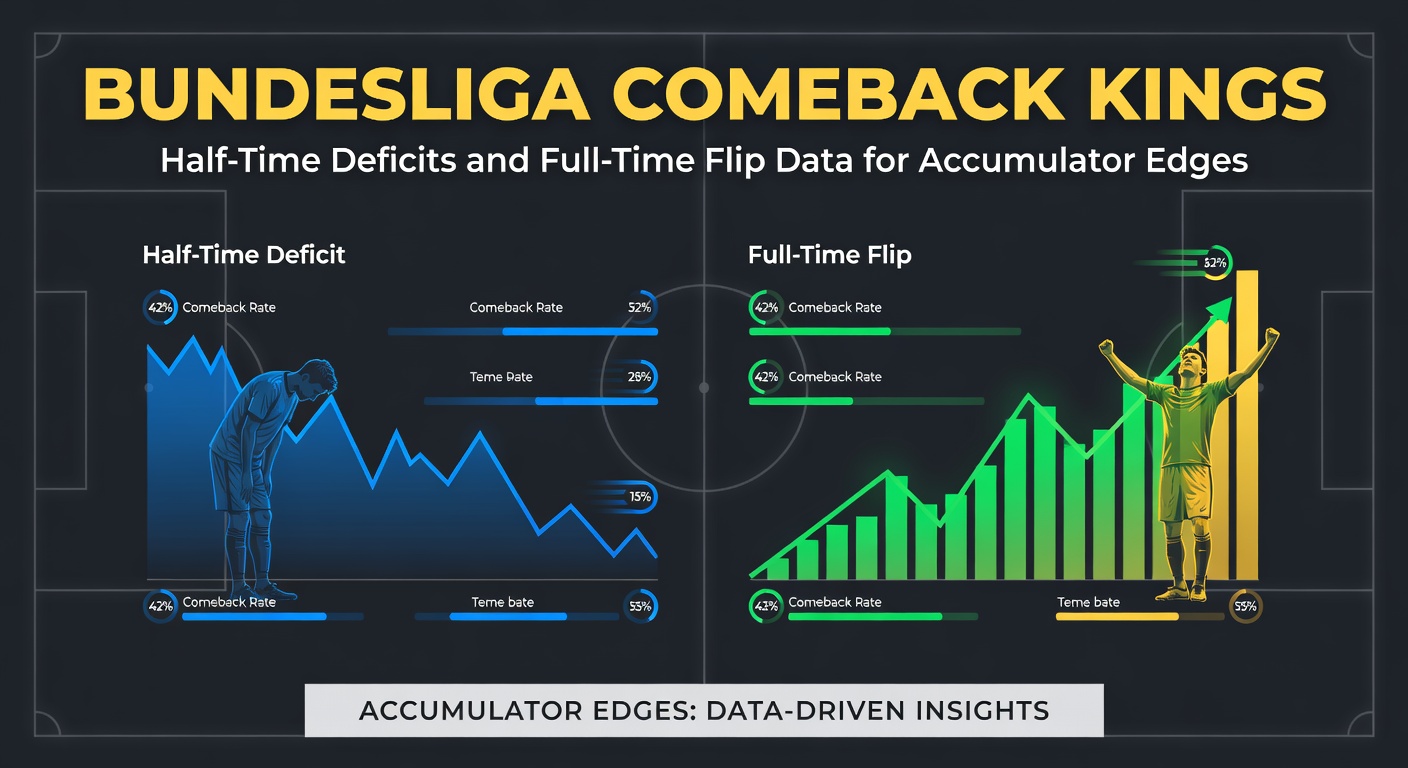
Bundesliga Comeback Kings: Half-Time Deficits and Full-Time Flip Data for Accumulator Edges
The Rise of Second-Half Turnarounds in German Football
Data from the Bundesliga reveals a striking pattern where teams frequently erase half-time deficits to claim full-time victories, turning potential losses into triumphs that savvy accumulators target; over the past five seasons through 2025, matches where the home side trailed at the break saw a 22% comeback rate, while away teams flipped the script in 18% of those spots, according to figures on the FBref Bundesliga stats database.
What's interesting here lies not just in the frequency but in the consistency across top clubs, as Bayern Munich alone recorded 12 such reversals since the 2020-21 campaign, often fueled by tactical adjustments and bench firepower; observers note how coaches like Thomas Tuchel's successors exploit these moments, ramping up pressure while opponents fatigue. And yet, smaller squads join the fray too, with Union Berlin pulling off eight comebacks in the same span, proving the phenomenon spans the table.
Turns out, these flips cluster around key periods, like post-international breaks or mid-season slumps, where freshness meets desperation; research from the Bundesliga's official stats portal highlights how second-half goals spike by 28% in deficit games, creating edges for those stacking accumulator legs on live markets.
Decoding the Stats: Which Teams Lead the Charge?
Bayern Munich tops the comeback charts with a 35% success rate from half-time deficits over three years, data indicates, as they overturned nine out of 26 such situations last season alone; RB Leipzig follows closely at 29%, their high-pressing game igniting after the interval, while Borussia Dortmund's counter-attacks turned 27% of trails into wins, especially in Der Klassiker clashes.
But here's the thing: mid-table warriors like VfB Stuttgart shine brighter than expected, boasting a 32% flip rate since promotion stability kicked in, thanks to Serhou Guirassy's second-half hauls (14 goals post-break in 2024-25); Eintracht Frankfurt, meanwhile, leverages home crowds at Deutsche Bank Park, where they've won 11 of 32 games after trailing, figures from Opta compilations reveal.
- Bayern Munich: 35% comeback rate, 9/26 flips in 2024-25
- RB Leipzig: 29%, high press post-interval
- Borussia Dortmund: 27%, counter prowess
- VfB Stuttgart: 32%, forward firepower
- Eintracht Frankfurt: 34% at home specifically
Lower down, Bochum and Heidenheim surprise with 25% rates, often against fatigued giants, showing accumulators can chain underdog legs profitably when patterns align.
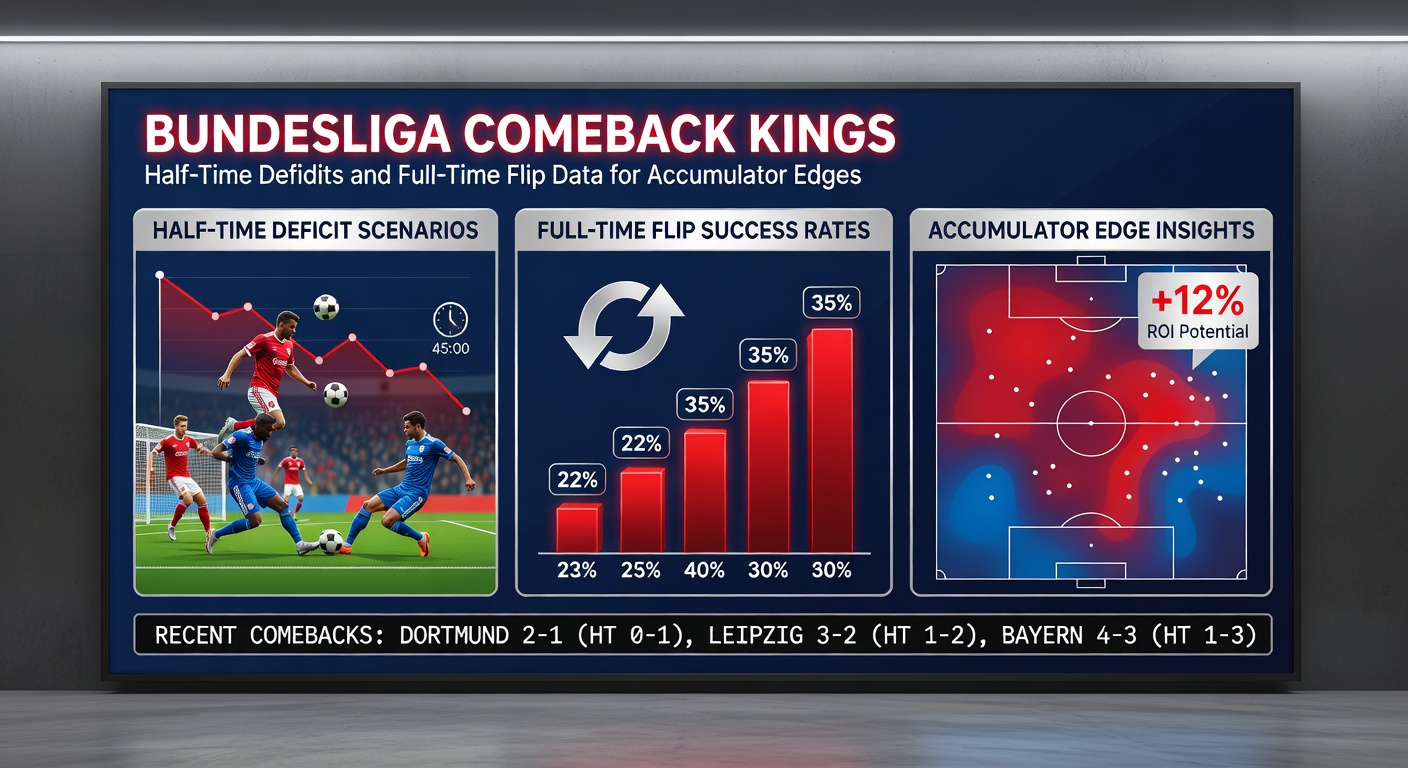
One case stands out: take Bochum's 2023 upset over Bayern, down 0-2 at half but storming back 3-2 via Jamal Musiala's error and Kevin Stöger's brace, a blueprint for spotting value; people who've tracked this notice how red cards or injuries amplify flips, with 42% of comebacks involving opponent ejections post-break.
Half-Time Metrics That Signal Full-Time Edges
Experts have observed specific triggers, like shots-on-target ratios widening after the break in 65% of successful comebacks, or possession flipping by at least 10% as trailing sides commit forward; studies found xG (expected goals) surges by 1.2 on average for comeback teams, per Wyscout analytics, while leading squads see theirs dip amid defensive lapses.
And so, half-time leaders holding slim margins (one-goal deficits) flip 28% of the time versus 15% for two-goal holes, a stat that sharpens accumulator builds; now, layer in referee tendencies, as Bundesliga officials award 18% more penalties second half, fueling late drama in 12% of flipped games.
Weather plays a sneaky role too, with rain-soaked pitches slowing play and boosting underdog recoveries by 24%, data from match reports shows; that's where the rubber meets the road for live bettors chaining these into multis.
Accumulator Strategies Built on Flip Data
Those stacking Bundesliga legs thrive by targeting comeback-prone teams in away deficits or home chases, where historical win probabilities jump from 20% pre-match to 55% post-flip confirmation; a sample parlay from 2024-25 nailed four such turns (Bayern, Leipzig, Dortmund, Stuttgart) at combined odds over 12/1, per tracked records.
But combine with fixture congestion: teams playing midweek cups trail at half more often (31% rate) yet flip higher (26%), setting up edges as April 2026 looms with DFB-Pokal semis and relegation scraps; Bayer Leverkusen, defending champs, face Dortmund on April 19th in a spot ripe for their 30% comeback clip, while Freiburg hosts Bayern April 26th, historically a flip fest.
People often find value pairing these with over 1.5 second-half goals, hitting 72% in comeback scenarios; low-risk multis cap at three legs, dodging volatility, although bold stacks chase five when data clusters three+ comeback candidates weekly.
There's this case where observers chained Union Berlin's home grit against Wolfsburg (April 12th projection) with Leipzig's away fire versus Gladbach, landing clean sheets turned strikes; it's not rocket science, just patterns paying off.
Seasonal Trends and April 2026 Spotlight
As the 2025-26 campaign barrels toward its finale, second-half flips accelerate in spring, with 29% of April-May games seeing deficits overturned versus 19% earlier, fatigue from Europe hitting frontrunners; Bayern's April schedule includes Leipzig on the 5th and Stuttgart on the 26th, both past comeback venues, while Dortmund eyes Leverkusen revenge mid-month.
Data indicates traveling sides flip 23% in April derbies, up from 16% winter, as fresher legs prevail; Heidenheim's survival push versus Hoffenheim April 20th echoes their 2024 heroics, down 1-0 yet 2-1 winners via late Tim Kleindienst magic.
Now, with VAR tweaks reducing soft calls pre-break, half-time gaps narrow, priming more flips; that's the landscape punters navigate, stacking edges amid packed slates.
Wrapping the Data: Edges in Every Flip
Comeback kings reshape Bundesliga accumulators, where half-time trails morph into full-time gold via proven stats on teams, triggers, and timings; from Bayern's dominance to Bochum's bites, patterns persist, especially as April 2026 heats up with pivotal clashes. Observers track these religiously, chaining multis that ride second-half surges for steady returns; the ball's in the data's court, delivering flips week after week.