Court Surface Transitions: How Clay-to-Grass Swings Reshape ATP Player Prop Values in Early Summer Swings
Mia Berger · Jul 25, 2026
Court Surface Transitions: How Clay-to-Grass Swings Reshape ATP Player Prop Values in Early Summer Swings
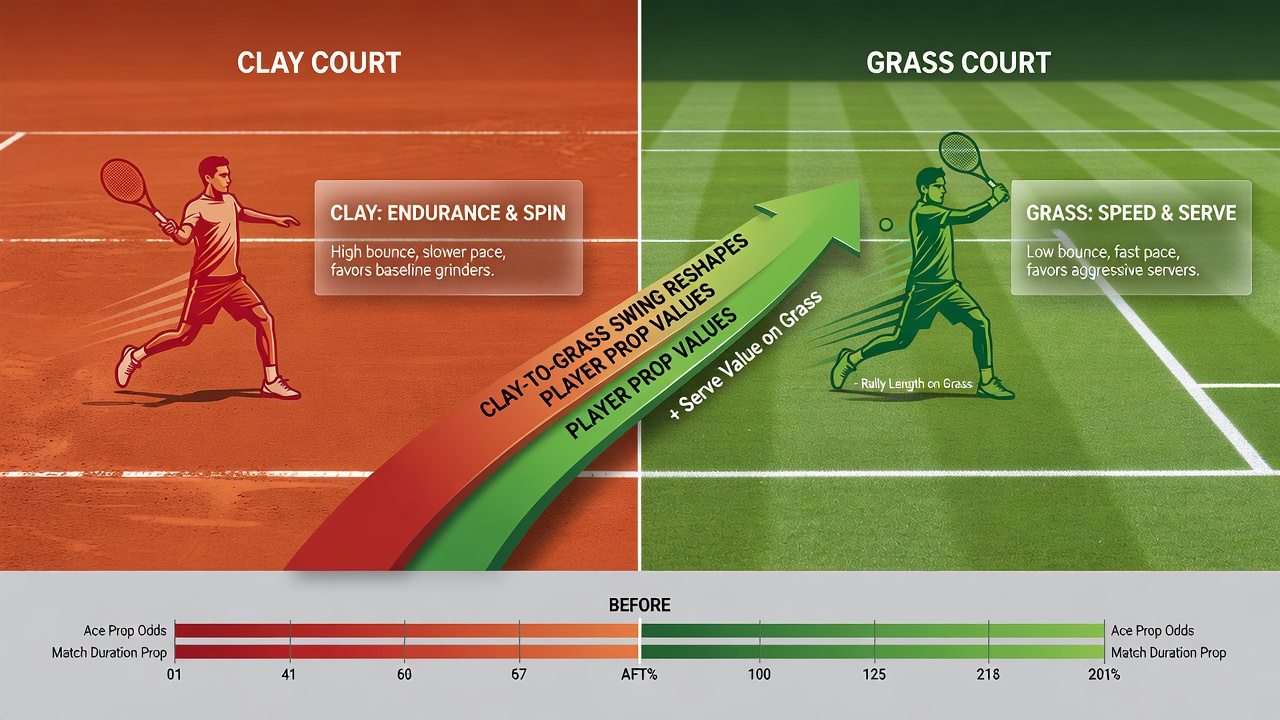
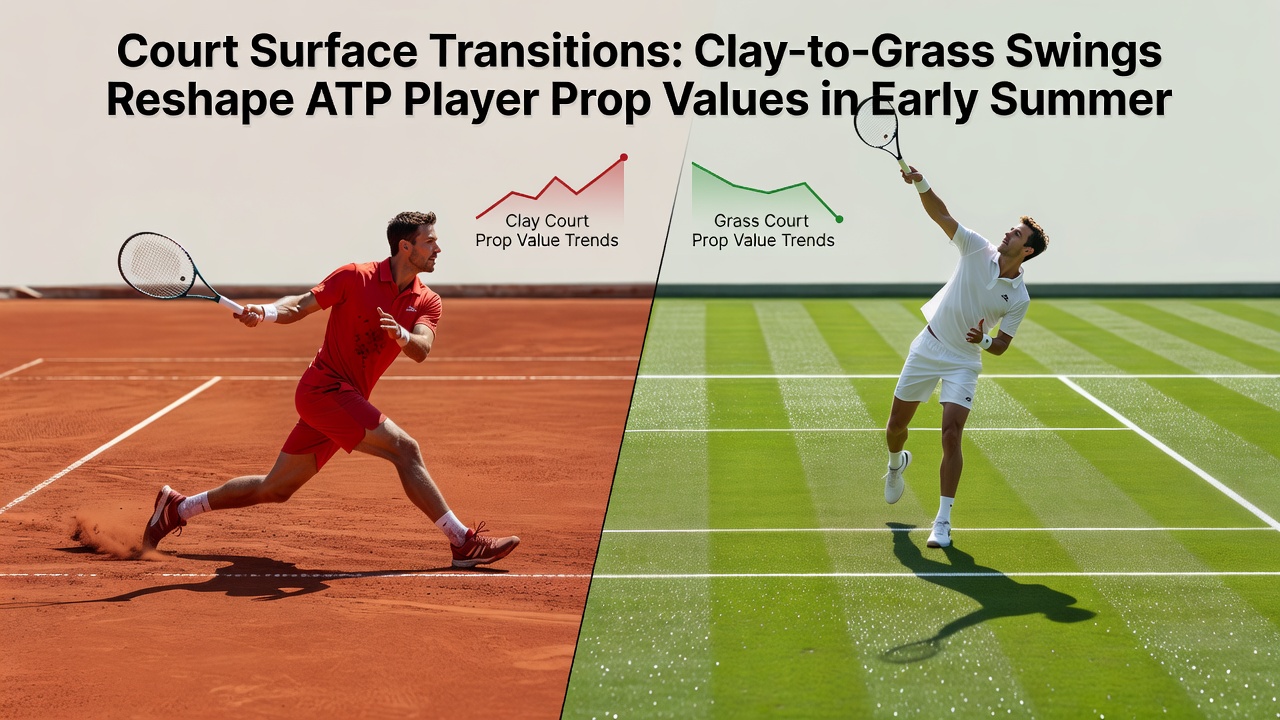
ATP players move from clay events like the French Open into grass-court tournaments each June, and this shift alters measurable performance metrics that feed into player prop markets. Clay slows the ball and produces higher bounces while grass allows quicker skids and lower trajectories, so serve percentages, ace rates, and rally outcomes change within days of arrival at new venues. Data compiled across multiple seasons shows consistent patterns in how individual athletes adjust their outputs once they step onto the faster surface.
Surface Characteristics and Statistical Shifts
Clay courts retain moisture and grip the ball longer, which extends point durations and reduces the frequency of outright winners on first serves. Grass courts dry faster and reward flatter trajectories, leading to higher ace totals and shorter rallies according to match logs maintained by the ATP Tour. Players who record elevated break-point conversion rates on clay often post lower figures during the first week on grass because return positioning must adapt to reduced bounce heights. Observers tracking serve speed data note that average first-serve velocities rise by several kilometers per hour when athletes switch surfaces, directly influencing over/under props tied to aces and service games won.
Player Adaptation Patterns in June and July
Many competitors schedule limited grass-court preparation after the clay season ends, and those limited tune-up matches produce measurable early-round variances. Athletes who reach the second week at Roland Garros frequently enter Wimbledon with fewer grass-court hours, which correlates with elevated double-fault rates in opening matches. Figures from the 2025 season indicated that top-seeded players averaged 1.8 more aces per match in their first three grass outings compared with their final three clay matches. In July 2026 the same calendar window will again place players on grass within ten days of clay events, repeating the compressed transition window that statisticians monitor for prop-value movement.
Prop Categories Most Affected
Ace props and total service points won move first because grass rewards big serves that skid through returners. Break-point save percentages also shift as returners struggle to handle low-bouncing deliveries, producing fewer breaks in early grass rounds. Winners-minus-unforced-errors margins widen on grass for aggressive baseliners who flatten their swings, while net-point success rates climb for those who incorporate more serve-and-volley elements. Researchers examining historical ATP datasets have linked these surface-driven changes to specific player archetypes, such as those with strong clay topspin games versus those whose flatter strokes translate immediately.
Case Examples from Recent Transitions
One player who reached the French Open quarterfinals in 2024 recorded a 12 percent increase in aces during his first two grass matches the following week, while his break-point conversion dropped from 42 percent to 31 percent. Another athlete who lost early on clay posted steadier numbers across surfaces because his pre-tournament grass block allowed earlier recalibration of footwork and swing paths. These individual swings appear in aggregated tournament reports and allow analysts to compare expected prop ranges against actual outputs once the surface changes.
Data Sources and Measurement Standards
Match statistics collected by the International Tennis Federation supply standardized measurements of bounce height and speed across court types, giving researchers consistent baselines for modeling prop adjustments. Additional tracking from the ATP performance database records point-by-point outcomes that reveal how rally lengths compress on grass. Academic studies published by sports-science departments at institutions such as the University of Queensland have examined kinematic changes in serve mechanics when athletes switch from clay to grass, confirming that shoulder and wrist angles adapt within a few practice sessions.
Calendar Pressure in Early Summer 2026
The 2026 schedule places the transition window between late June and mid-July, compressing recovery and adaptation time for athletes who compete deep at both the French Open and Wimbledon. Tournament organizers maintain identical court-preparation protocols each year, yet variable weather in London can further alter grass pace and influence prop thresholds. Players who balance clay and grass commitments through selective scheduling often display smaller statistical swings than those who arrive on grass with minimal prior exposure.
Conclusion
Surface transitions from clay to grass produce repeatable shifts in ace rates, rally durations, and break-point outcomes that reshape player prop values during the early summer ATP swing. Aggregated match data and biomechanical measurements document these adjustments across multiple seasons, while the compressed 2026 calendar will again test how quickly athletes recalibrate their outputs when the ball begins to skid.