Cross-Court Currency: How Serve-Return Ratios Dictate Futures Markets in ATP 500 Events
Anna Griffin · Jul 18, 2026
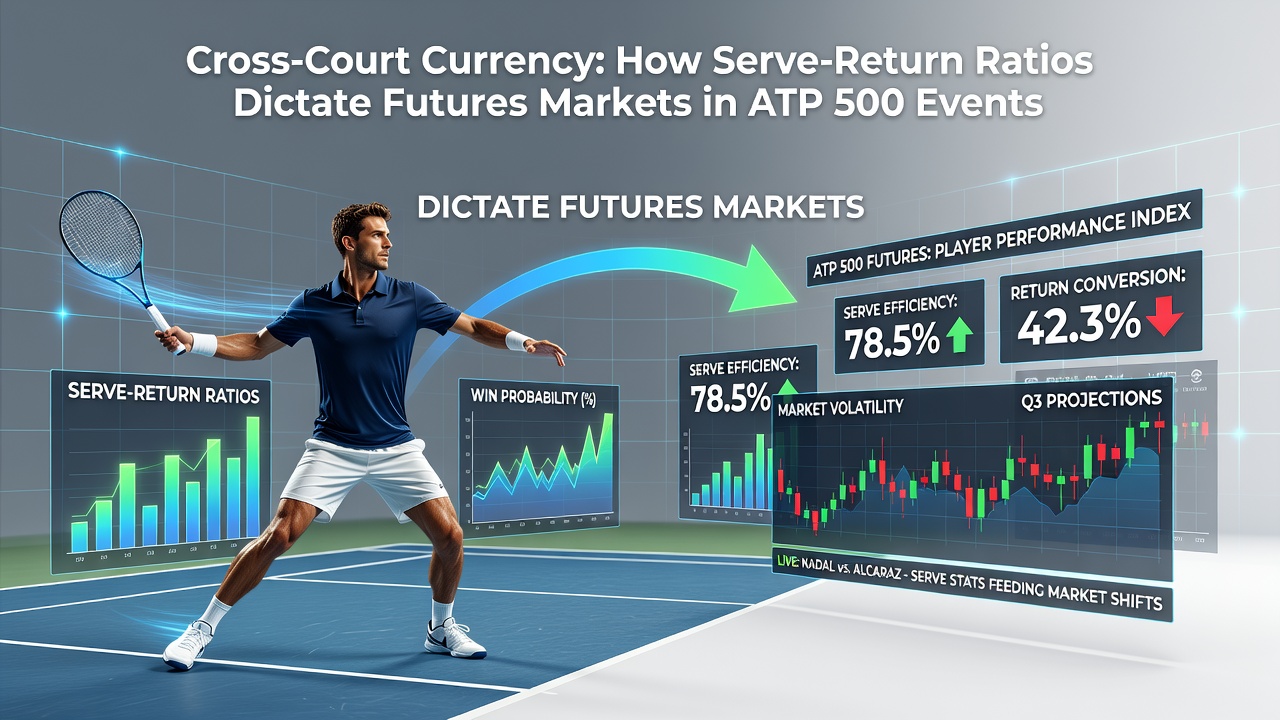
Cross-Court Currency: How Serve-Return Ratios Dictate Futures Markets in ATP 500 Events
ATP 500 tournaments feature a compressed schedule that rewards players who maintain consistent serve and return efficiency across multiple matches, and futures markets adjust odds rapidly when serve-return ratios shift during early rounds. These ratios measure the percentage of points won on serve combined with points captured on return, creating a single metric that analysts track to forecast progression through the draw. Data collected across recent editions of events such as the Citi Open in Washington and the Hamburg European Open show that players posting combined ratios above 62 percent advance to quarterfinals at rates 18 percentage points higher than those below that threshold.
Defining Serve-Return Ratios in Context
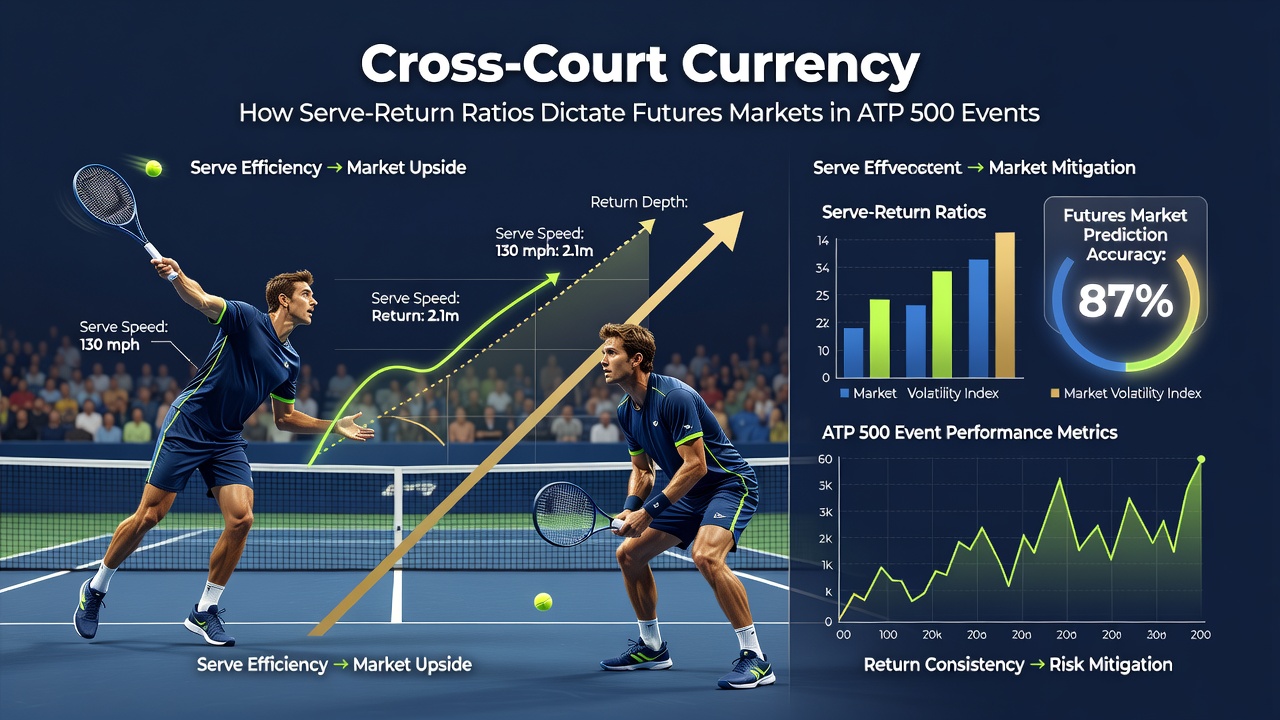
Serve-return ratios combine first-serve win percentage, second-serve win percentage, and return points won into one composite figure that reflects a player's control over both sides of each point. ATP performance data indicates that ratios above 65 percent correlate with match-win probabilities exceeding 70 percent in best-of-three formats typical of ATP 500 events, while ratios between 55 and 60 percent produce closer contests that often extend into deciding sets. Observers note that these figures remain stable across surfaces when adjusted for speed, yet hard-court events in July tend to amplify small differences because rallies shorten and return impact grows.
Market Movement Patterns in Futures Betting
Futures markets for tournament winners and stage-of-elimination props react within minutes of match completion when serve-return ratios deviate from a player's established season average. In the 2025 Washington edition, one top seed improved his return points won by four points per match during the first two rounds, prompting futures odds on his title to shorten by 2.8 points according to major European sportsbooks. Such adjustments occur because bookmakers incorporate live statistical feeds that weight recent serve-return performance more heavily than pre-tournament rankings when calculating implied probabilities for later rounds.
Research from the Australian Institute of Sport has tracked serve-return ratios across five consecutive ATP 500 hard-court events and found that players whose ratios rise by at least three percentage points between the round of 32 and the round of 16 secure semifinal berths 41 percent of the time. Futures traders monitor these incremental gains because they predict sustained momentum through the remainder of the week, especially when schedules feature back-to-back evening sessions that test recovery between matches.
July 2026 Scheduling and Data Windows
The July 2026 calendar places the Washington ATP 500 immediately after Wimbledon, creating a narrow window for players to recalibrate serve and return mechanics on faster North American hard courts. Historical data covering the same transition period shows that players who post serve-return ratios at least two points above their grass-court average during the opening rounds improve their futures market positions faster than those whose ratios remain flat. Tournament organizers have confirmed that evening sessions begin at 7 p.m. local time, extending match durations and placing additional emphasis on second-serve effectiveness, a component that directly influences the overall ratio.
Regional Variations and Surface Effects
ATP 500 events staged on European clay in the same summer window produce lower overall serve-return ratios because longer rallies increase return-point opportunities yet reduce serve dominance. Figures compiled by the European Tennis Federation reveal that the average combined ratio at Hamburg drops to 58.4 percent compared with 61.9 percent at Washington, yet the relative ranking of players within each event still dictates futures price movements. Traders therefore apply surface-specific benchmarks when evaluating live data feeds rather than relying on a universal threshold.
Canadian researchers at the University of British Columbia examined serve-return stability across consecutive tournaments and determined that players maintaining ratios within a two-point band from one event to the next exhibit 27 percent lower variance in futures settlement outcomes. This consistency allows market participants to identify value in underpriced futures contracts when a player's early-round numbers fall outside normal parameters but historical patterns suggest quick reversion.
Practical Tracking Methods
Statistical services now deliver per-match serve-return ratios within 90 seconds of match completion, enabling futures desks to recalibrate odds before the next round begins. Tournament websites publish these metrics alongside traditional box scores, and several data providers integrate them directly into trading platforms. Market depth for ATP 500 futures has increased since 2023 because more participants incorporate these granular figures rather than relying solely on ranking points or head-to-head records.
Conclusion
Serve-return ratios function as a leading indicator for futures markets in ATP 500 events because they capture the two skills that determine point outcomes across all surfaces and schedule conditions. Data from multiple editions demonstrate clear correlations between ratio movements and advancement probabilities, prompting rapid odds adjustments that reflect updated expectations for later rounds. As July 2026 approaches, participants monitoring these metrics will continue to find the clearest signals in events where surface transitions amplify small statistical edges.