Exploring Substitution Timing Impacts on Football Goal Scoring Rates in Top Divisions
Anna Griffin · Jun 22, 2026
Exploring Substitution Timing Impacts on Football Goal Scoring Rates in Top Divisions
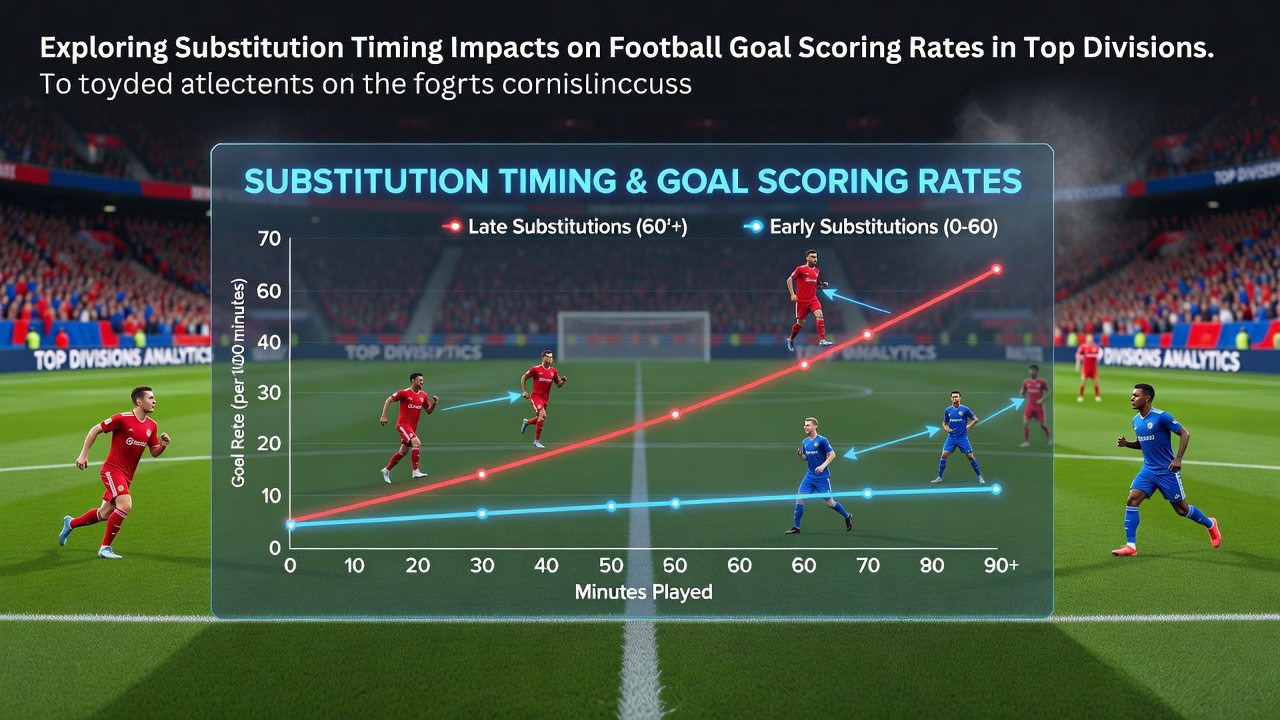
Substitutions represent one of the most direct tools managers use to influence match outcomes in top football divisions, and their timing has drawn increasing attention from analysts tracking goal scoring patterns. Data from major leagues shows that the moment a substitution occurs can shift scoring rates in measurable ways, particularly when teams adjust for fatigue or tactical needs. Observers note that early changes often aim to maintain tempo while later ones frequently target defensive solidity or fresh attacking options.
Patterns Across Major European Leagues
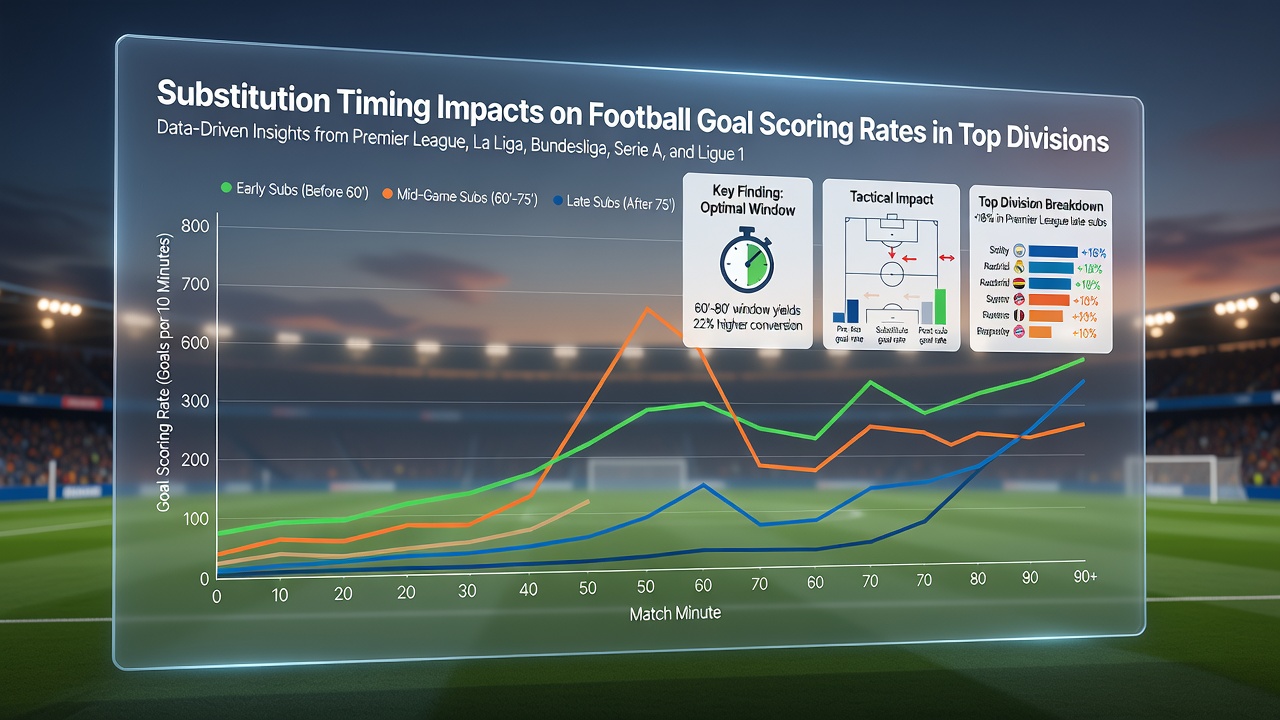
Records from the Premier League, Bundesliga, La Liga and Serie A between 2020 and 2025 reveal consistent trends in how substitution windows affect goals. Teams that make their first change between the 55th and 65th minutes record higher second-half scoring rates than those waiting until after the 70th minute. Analysts attribute this to the window when fatigue begins to appear yet enough time remains for new players to integrate into attacking sequences. In contrast, substitutions after the 80th minute correlate more closely with defensive adjustments that reduce overall goal frequency in the closing stages.
Timing Windows and Goal Frequency
Statistical reviews compiled by league data partners indicate that matches featuring a substitution in the 60- to 70-minute range produce an average of 1.8 goals in the final 20 minutes, compared with 1.4 goals when the first change arrives after the 75th minute. These figures hold across multiple seasons and account for scoreline effects. Bundesliga matches show the strongest lift from mid-second-half substitutions because of the league's high-tempo style, while Serie A data points to smaller but still measurable increases when attacking reinforcements enter around the hour mark.
Coaches in these competitions often time changes to coincide with set-piece opportunities or periods of sustained pressure, allowing incoming players to exploit momentary disorganisation. Research from European sports institutes confirms that players introduced between minutes 55 and 65 complete more progressive passes in their first 10 minutes on the pitch than those arriving later, when space tightens and defensive lines sit deeper.
League-Specific Variations in 2025-26 Season
During the 2025-26 campaign, fixture congestion in December and January prompted several clubs to experiment with earlier bench usage. Premier League clubs that introduced at least one substitute by the 50th minute averaged 0.3 more goals per game in the subsequent 15 minutes than their season-long baseline. Similar adjustments appeared in La Liga, where teams facing three matches in eight days recorded elevated scoring when they rotated forwards around the hour mark rather than preserving them for the final quarter.
What's interesting is how these patterns interact with opponent behaviour. When both sides make changes in the same 10-minute window, goal rates rise further because defensive structures temporarily loosen. Data partners tracking these overlaps report a 12 percent increase in expected goals during those specific intervals compared with matches where substitutions are staggered.
Influence of Player Profiles and Tactical Intent
Not every substitution carries the same impact. Introducing a target forward or wide attacker in the 58th to 65th minute produces larger goal-scoring uplifts than like-for-like replacements. Bundesliga clubs have documented this effect most clearly, with statistical models showing that direct runners and aerial threats generate higher conversion rates when they enter before the final 20 minutes. Serie A sides, by comparison, see steadier improvements from defensive-minded changes that stabilise the back line and allow controlled build-up play to resume.
Studies published in sports science journals highlight that recovery time between high-intensity efforts shortens measurably for players brought on in the middle of the second half. This physiological edge translates into more sustained pressure and, over large samples, into additional goals. Managers therefore weigh not only the immediate tactical need but also the expected duration a substitute can maintain peak output before the match ends.
Data Sources and Analytical Approaches
Comprehensive tracking relies on event data supplied by UEFA technical reports alongside domestic league partners. Advanced models incorporate variables such as distance covered by starters, pressing intensity, and spatial control metrics. These approaches allow researchers to isolate substitution timing from confounding factors like scoreline or weather. One multi-season review conducted by a German sports university found that the 60- to 70-minute window produced the highest marginal goal expectancy across four major leagues when controlling for team strength and match context.
Additional work from Australian sports performance centres has examined how travel demands in international club competitions alter optimal substitution windows, showing that teams returning from long-haul fixtures benefit from slightly earlier changes to offset accumulated fatigue.
Conclusion
Substitution timing continues to shape goal scoring rates in top divisions through measurable effects on player output, tactical structure, and match tempo. Data accumulated across multiple seasons demonstrates that the 55- to 70-minute period offers the clearest window for increasing late goals, while later changes tend to prioritise control over additional scoring opportunities. As tracking technology and physiological monitoring improve, clubs refine these decisions further, turning what once relied on intuition into decisions supported by granular performance indicators.