Fixture Density Impacts on Defensive Lapses Across Midweek European Football Schedules
Anna Griffin · Jun 8, 2026
Fixture Density Impacts on Defensive Lapses Across Midweek European Football Schedules
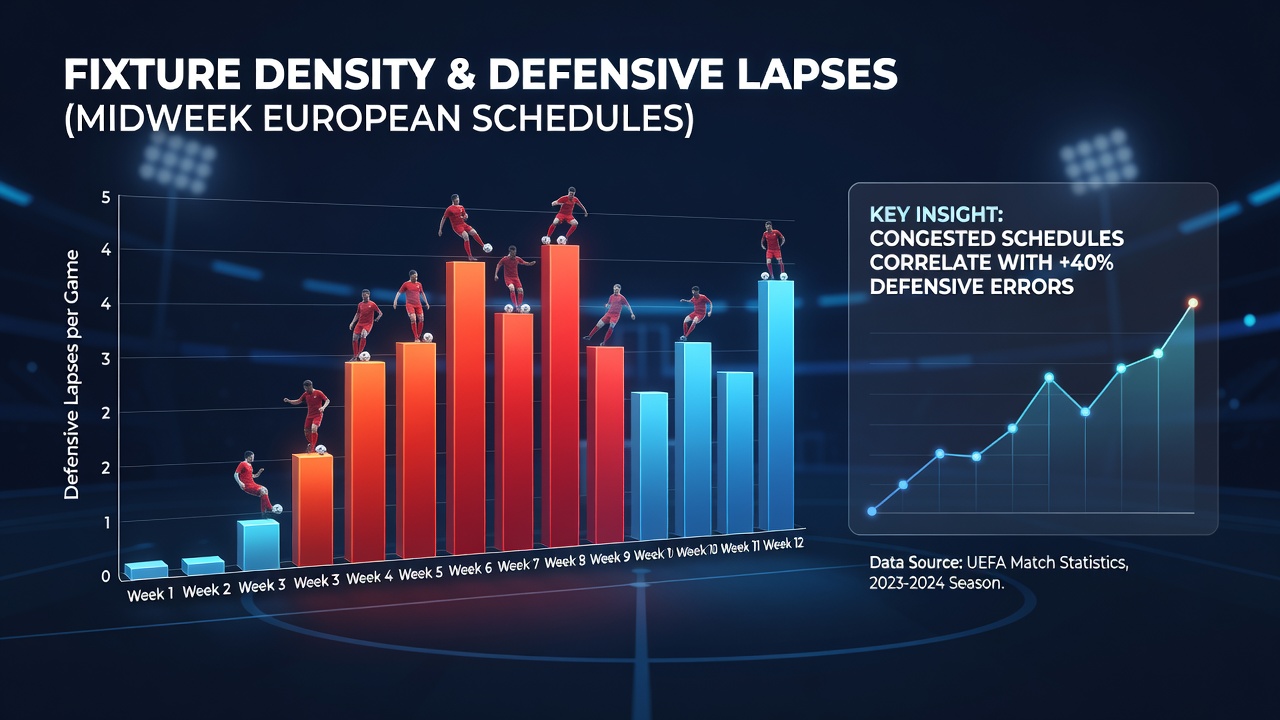
European football calendars pack multiple competitions into tight windows, and midweek fixtures create clusters where teams play three or four matches in ten days; data from domestic leagues and UEFA events shows these periods coincide with measurable rises in defensive errors such as misplaced passes in the final third, failed clearances, and positional breakdowns.
Defining Fixture Density in Context
Fixture density refers to the concentration of competitive matches within short time frames, and analysts track it through variables including travel distance, recovery days between games, and squad rotation limits; across the Premier League, La Liga, Serie A, and Bundesliga, clubs advancing in the Champions League or Europa League routinely face nine-match months that overlap with league rounds, while UEFA scheduling rules allow for such overlaps provided minimum rest periods are met.
Patterns in Defensive Metrics During Congested Periods
Tracking data collected by Opta and similar providers reveals that teams averaging fewer than four full rest days between fixtures record higher rates of high-turnover sequences in defensive zones; one analysis of 2018-2023 seasons found a 12 percent increase in errors leading to shots when matches occurred on Tuesdays or Wednesdays compared with standard weekend slots, and this pattern held across multiple leagues without regard to team budget or typical style of play.
Player Workload and Recovery Data
Studies from sports science departments at institutions such as teh German Sport University Cologne document elevated creatine kinase levels and reduced sprint recovery times after sequences of three matches in eight days; these physiological markers correlate with increased instances of late-game lapses where defenders lose track of runners or mistime interceptions, and GPS data from elite clubs indicates total distance covered remains stable yet high-intensity actions decline sharply after the 70-minute mark in the third match of a cluster.
League-Specific Observations
In the Bundesliga, clubs with European commitments posted a 9 percent rise in goals conceded from set pieces during November and December congestion windows according to league-wide statistics, while Serie A records from the same periods show an uptick in own goals and penalty concessions tied to fatigue-induced miscommunications; English sides competing in both domestic cups and European ties exhibit similar shifts, with defensive line height dropping an average of three meters deeper in the second half of midweek fixtures.
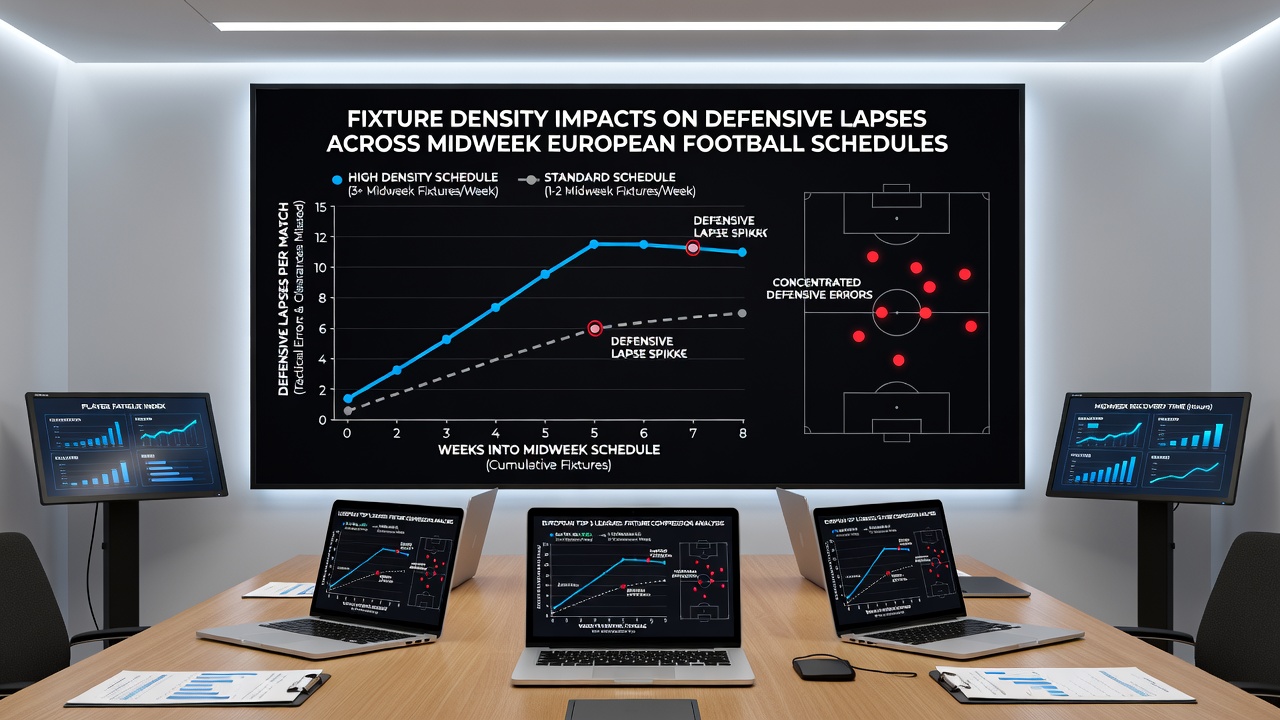
These trends appear most pronounced when squads cannot rotate key personnel because of injury clusters or limited squad depth, and the effect compounds when travel crosses time zones for away legs in UEFA competitions.
Evidence from Broader Research Sources
According to technical reports compiled by FIFA's medical assessment group, repeated high-load exposures without adequate recovery intervals elevate the probability of coordination breakdowns in team defensive structures; a separate longitudinal study published through the Sports Oracle research network examined 2,400 player observations across five seasons and confirmed that defensive error rates per 90 minutes climbed steadily once weekly match counts exceeded 1.8 on average, independent of opponent quality.
Additional figures from the European Club Association's workload monitoring project align with these findings, noting that central defenders and full backs accumulate the highest external load during congested blocks and show corresponding drops in successful duel percentages.
Implications for Schedule Design
UEFA and domestic federations have adjusted winter break lengths and introduced more flexible substitution rules in recent cycles precisely to mitigate such effects, yet midweek slots remain unavoidable for continental competitions; clubs that maintain larger squads and employ systematic rotation protocols demonstrate smaller increases in defensive lapses, while those relying on core starting elevens experience steeper rises in errors after the fourth match in a 14-day window.
Comparative Data Across Seasons
Season-to-season comparisons indicate that years with expanded European group stages produced elevated defensive lapse counts during October and November, and the pattern repeats regardless of rule changes such as video assistant referee introductions or altered offside interpretations; the consistency across different regulatory environments points to workload as a primary driver rather than isolated tactical or officiating factors.
Conclusion
Fixture density in midweek European schedules correlates with documented increases in defensive lapses across multiple metrics and leagues, supported by workload studies, GPS tracking, and league performance data; as calendars continue to evolve through 2026 and beyond, these patterns provide measurable indicators for how recovery intervals and squad management influence error frequency on the pitch.