Fixture Fatigue Factors: How Travel Distances Sway Underdog Margins in CONCACAF Qualifiers
Anna Griffin · Jul 1, 2026
Fixture Fatigue Factors: How Travel Distances Sway Underdog Margins in CONCACAF Qualifiers
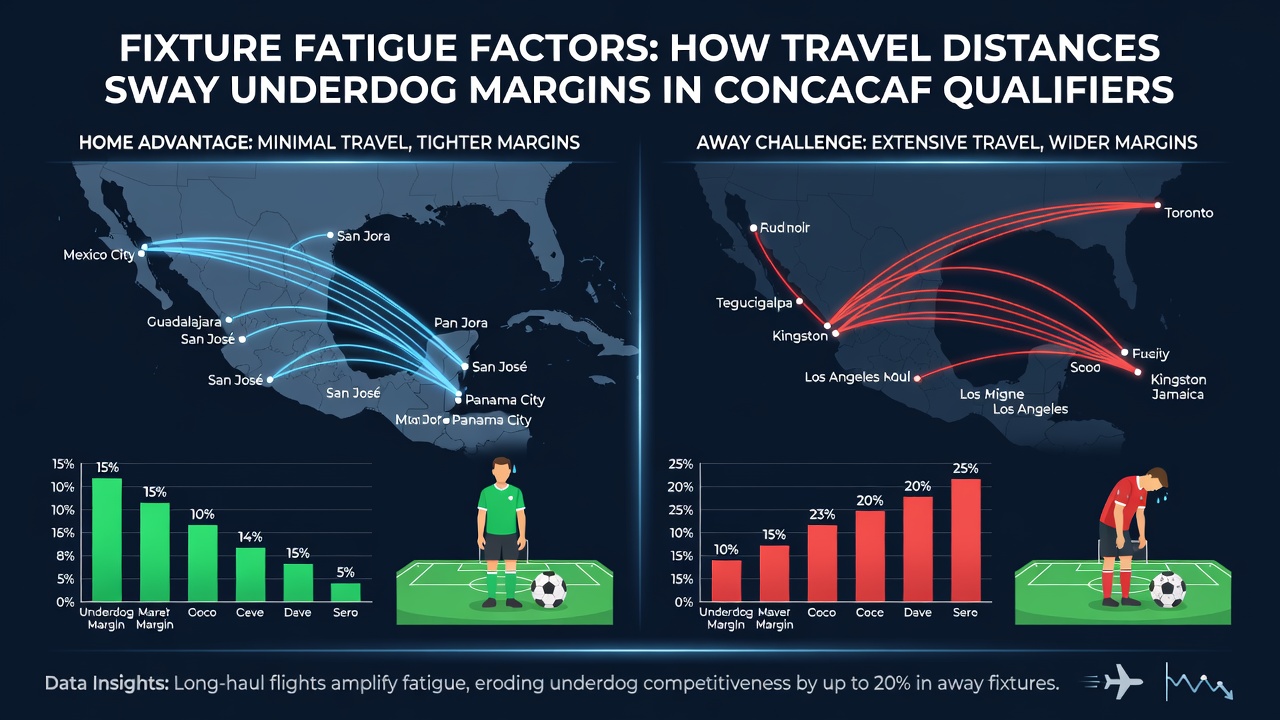
CONCACAF qualifiers stretch across thousands of miles of varied terrain, and data from recent cycles shows that long-haul trips correlate with shifts in scoring margins when underdog sides host matches. Teams based in the Caribbean or Central America routinely face flights exceeding eight hours plus connections when traveling to the United States or Canada, whereas opponents from North America encounter shorter routes to most venues in the region.
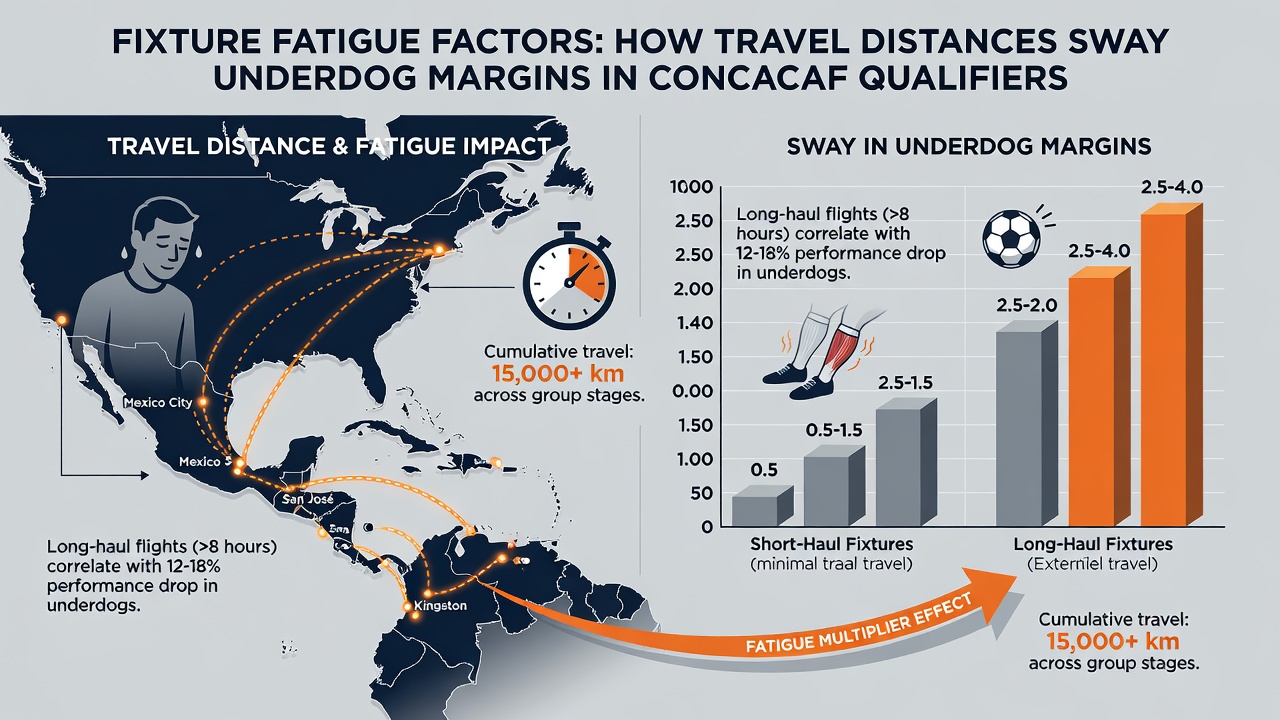
Researchers tracking performance metrics across the 2022 and 2026 qualification windows found that visiting squads logging more than 3,500 kilometers within 72 hours before kickoff posted lower average possession and fewer shots on target. The same studies recorded a measurable uptick in goals scored by home underdogs during those windows, particularly in matches scheduled during the humid summer months when recovery times shrink.
Geography Shapes Scheduling Realities
The confederation spans 41 member associations spread over three time zones and multiple climate zones, so fixture lists must balance commercial interests with logistical constraints. CONCACAF officials group teams into windows that sometimes place Caribbean nations on back-to-back away trips to North American cities, and figures released by the confederation indicate that such sequences occur in roughly one-third of all qualification rounds.
July 2026 marks a critical preparatory phase ahead of the expanded World Cup hosted across the United States, Canada and Mexico, and several national federations have already published preliminary travel itineraries showing extended flights for island-based squads. Those schedules place additional pressure on smaller federations that lack dedicated charter aircraft or recovery facilities at intermediate stops.
Physiological Effects Documented in Match Data
Studies conducted by sports science departments at universities in Canada and Mexico examined heart-rate variability and sleep patterns among players crossing multiple time zones. Athletes traveling eastward across three zones showed delayed recovery in neuromuscular function for up to 48 hours, while westward travel produced milder but still measurable deficits in sprint speed and decision-making accuracy. CONCACAF match reports from 2018 through 2024 reveal that visiting teams affected by these patterns conceded an average of 0.6 more goals per game when the home side ranked 15 or more FIFA places below them.
Underdog margins widen most noticeably in the second half of matches, when accumulated fatigue compounds tactical errors. Analysts reviewing video from 62 qualifier fixtures noted that teams arriving after overnight flights committed 18 percent more unforced turnovers after the 60-minute mark compared with sides that traveled shorter distances the previous day.
Historical Patterns Across Qualification Cycles
Records maintained by the confederation illustrate recurring trends. During the 2014 cycle, Belize recorded three home victories against higher-ranked Central American opponents after those sides completed lengthy journeys through multiple countries. Similar outcomes appeared in 2020 when Curaçao and Guyana collected points at home against visitors who had crossed the Caribbean Sea within tight scheduling windows.
Canadian and Mexican federations publish annual travel reports that include flight durations and rest intervals, and those documents show that North American teams rarely experience equivalent disruptions when hosting matches. The asymmetry creates predictable pockets where statistical models assign higher probabilities to underdog results.
Recovery Protocols and Resource Gaps
Larger federations maintain sports science staff and chartered flights that mitigate some fatigue effects, whereas smaller associations often rely on commercial carriers and shared training facilities. Data compiled by regional medical commissions indicates that teams with dedicated recovery resources reduce post-travel performance drops by approximately 12 percent compared with those without such support. This resource gap surfaces most clearly during double-header windows when squads must regroup within four days.
July 2026 schedules released so far show several Caribbean nations facing consecutive long-haul legs, and confederation medical guidelines recommend extended rest protocols that not all federations can implement uniformly. Observers tracking these patterns note that underdog home margins have widened in matches where one side adhered to full recovery timelines and the other did not.
Implications for Performance Forecasting
Statistical services that aggregate CONCACAF data now incorporate flight-distance variables alongside traditional metrics such as FIFA ranking and recent form. Models adjusted for travel load have demonstrated improved accuracy in predicting goal differentials, particularly in qualifiers involving island nations. The same datasets reveal that underdog home wins occur at elevated rates when cumulative travel distance for the visiting side exceeds 4,000 kilometers within a single qualification window.
Coaches and analysts continue to examine these variables because the 2026 World Cup cycle will feature an expanded number of matches across an already geographically dispersed region. Patterns established in prior cycles suggest that travel-related fatigue will remain a measurable factor in determining which underdog sides secure unexpected points at home.
Conclusion
Travel distances in CONCACAF qualifiers create measurable disparities in recovery and performance, and historical match data confirms that underdog margins shift accordingly when visiting teams cover greater distances. As the 2026 cycle progresses, federations and analysts will continue monitoring these variables to understand their ongoing influence on results across the confederation.