How Pitch Dimensions Reshape Passing Lanes and Goal Expectation Models in Top-Flight Soccer
Iris Wolf · Jun 20, 2026
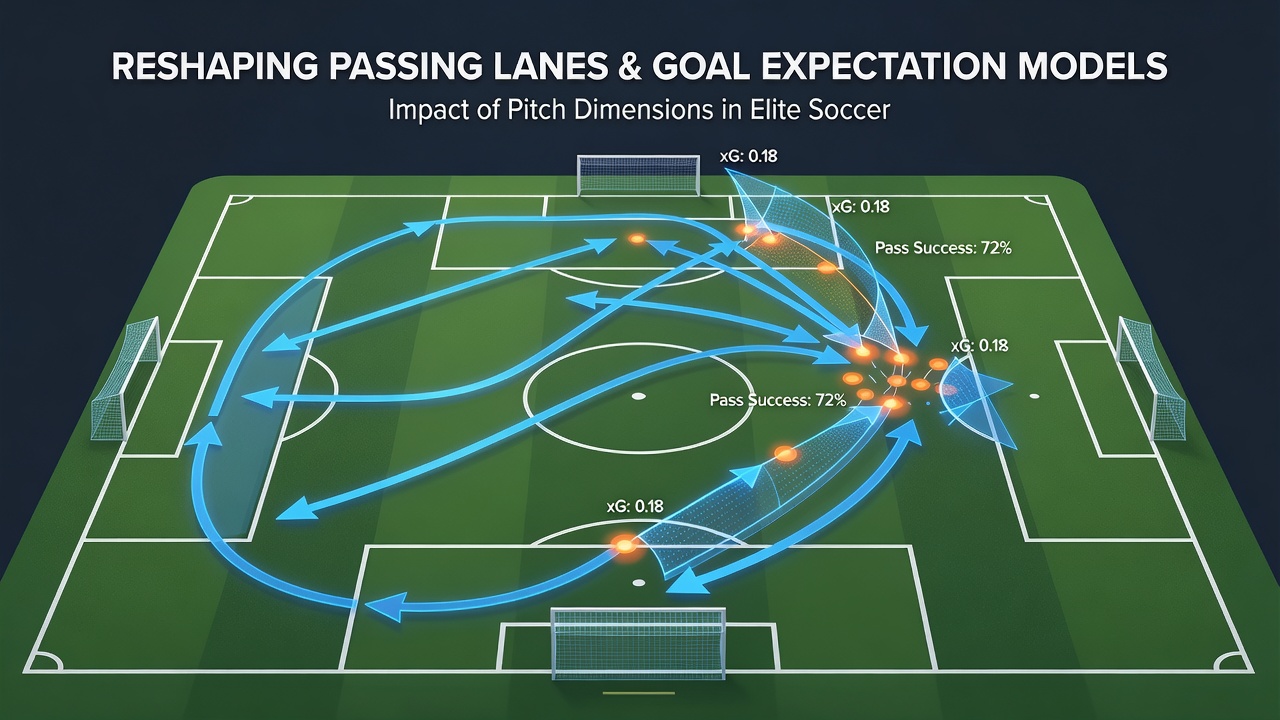
How Pitch Dimensions Reshape Passing Lanes and Goal Expectation Models in Top-Flight Soccer
Pitch dimensions in top-flight soccer create measurable shifts in how teams construct attacks and how analysts calculate goal probabilities, since length and width directly influence available space between defenders. FIFA regulations set minimum lengths at 100 meters and widths at 64 meters while maximums reach 110 meters long and 75 meters wide, yet individual stadiums often sit within narrower ranges that produce consistent patterns across matches. Researchers tracking Opta data across the Premier League, Bundesliga, and Serie A have documented how even small variations in width alter the geometry of passing options, particularly in central zones where compact defenses normally restrict vertical progression.Width Variations and Lateral Passing Options
Wider pitches expand horizontal space between fullbacks and center backs, which allows midfielders to receive the ball in pockets that remain closed on narrower surfaces. Data from the 2024-25 season across five major European leagues shows teams playing on fields exceeding 70 meters in width recorded 12 percent more successful line-breaking passes into the final third compared with those on pitches under 68 meters. This occurs because defenders must cover greater distances to close gaps, creating temporary windows for through balls that stretch vertically while also opening angled options toward the touchlines. Analysts at the German Football Association noted similar trends in Bundesliga matches during the spring of 2025, where clubs with possession-oriented styles benefited from the extra meters when building from the back.
Length Effects on Vertical Channels
Longer pitches extend the distance between the defensive and attacking lines, which changes the timing required for forwards to time runs behind high defensive blocks. When the playing surface stretches toward 110 meters, teams employing direct styles gain additional seconds before offside traps can reset, and this adjustment shows up in tracking data as increased entries into the penalty area from central zones. Conversely, shorter fields compress these channels and force quicker decisions, raising the frequency of sideways passes that recycle possession without advancing the ball. European Championship qualifying matches played on venues with shorter lengths during 2025 illustrated this compression effect, as several underdog sides recorded higher pass completion rates inside their own half while struggling to transition forward.
Adjustments in Goal Expectation Calculations
Goal expectation models rely on historical shot locations and contextual features, yet pitch size introduces a variable that standard xG frameworks must incorporate to maintain accuracy. When analysts recalibrate models using width measurements as an input, they find that shots taken from identical coordinates carry different probabilities depending on how much space surrounds the shooter and the nearest defender. A study published by researchers at the University of Sydney in 2025 demonstrated that widening the pitch by two meters increased the expected value of shots from the edge of the box by approximately 0.03 goals per attempt, primarily because wider dimensions reduce the density of recovering defenders. Top-flight clubs now feed pitch-specific measurements into their internal models ahead of away fixtures, and this practice became more widespread ahead of the 2026 international window when several national federations released updated technical reports on venue standardization.
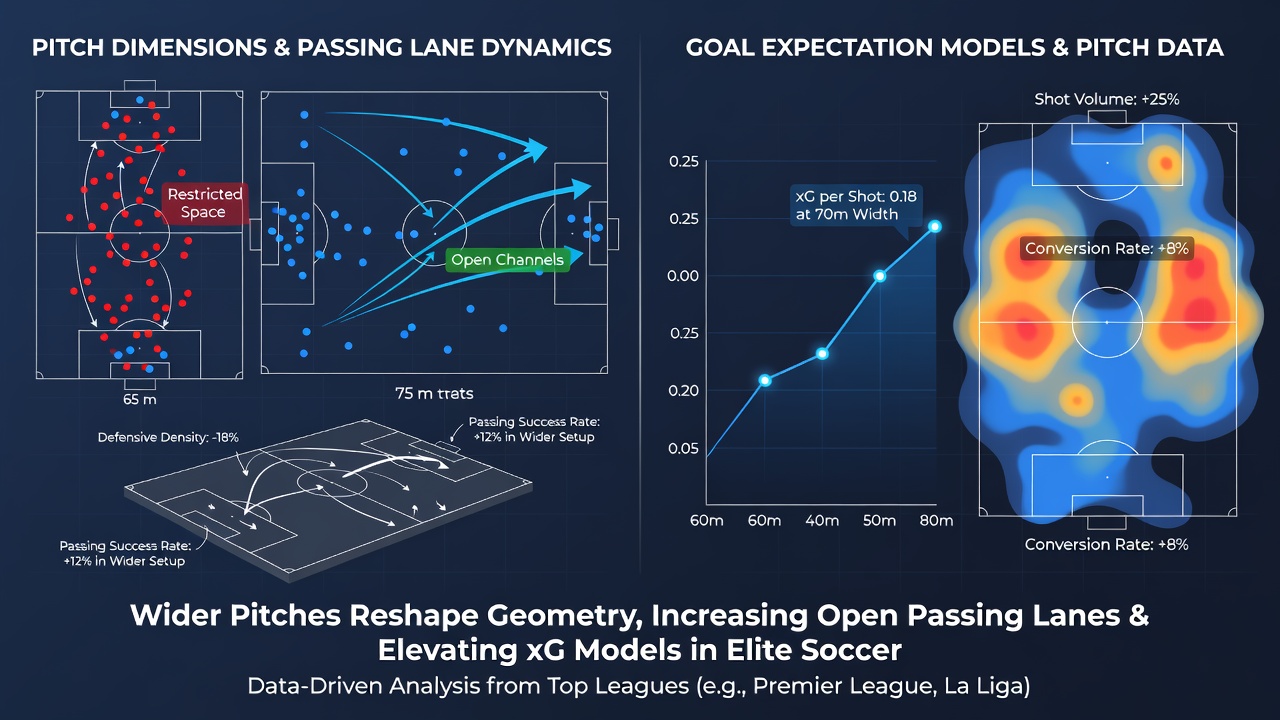
Passing lane metrics also shift when models account for pitch size, because the Euclidean distance between players expands or contracts with the field boundaries. Narrower surfaces shorten the horizontal component of many progressive passes, which in turn raises the success rate of shorter, safer options while lowering the volume of ambitious diagonal balls. League-wide figures compiled through the end of May 2026 indicate that teams facing opponents on narrower pitches concede fewer high-quality chances from central areas, since the compressed width funnels play into zones already heavily defended. This pattern appears consistently in both domestic leagues and continental competitions where venues vary more widely than in tightly regulated domestic stadiums.
League-Specific Patterns and Data Trends
The Premier League maintains relatively consistent pitch dimensions across its 20 clubs, yet slight differences between older grounds and newer builds still register in advanced statistics. Bundesliga venues tend toward greater width on average, which aligns with the league's historically higher number of open-play goals created from wide positions. In Serie A, where several historic stadiums feature shorter lengths, analysts observe elevated rates of recycled possession sequences that prioritize control over vertical penetration. These league-level differences become especially relevant when teams prepare for European ties, since away sides must recalibrate both their tactical setups and the underlying models they use to predict match outcomes.
Coaches who review opponent data ahead of matches frequently request pitch measurements as part of pre-match packs, and this information feeds directly into set-piece planning as well as open-play strategies. When a visiting team encounters a wider surface than their home ground, training sessions often emphasize drills that exploit the additional lateral space, while narrower pitches prompt emphasis on tighter combinations and quicker one-touch play. The cumulative effect on goal expectation models shows up in post-match reviews, where expected goals totals sometimes diverge from pre-match projections once the actual pitch dimensions are factored into the calculations.
Conclusion
Pitch dimensions continue to influence both the geometry of passing lanes and the accuracy of goal expectation models as top-flight soccer incorporates more granular venue data into performance analysis. Teams and analysts who integrate these measurements produce more reliable forecasts for chance creation and defensive organization, particularly when traveling between stadiums with measurable differences in width or length. As leagues prepare for the 2026 calendar, ongoing refinements to tracking technology and model inputs will likely sharpen the connection between physical pitch specifications and on-field outcomes across major competitions.