Referee Assignment Trends Exposing Edges in Disciplinary Markets for Saturday Football Accumulators
Anna Griffin · Jun 10, 2026
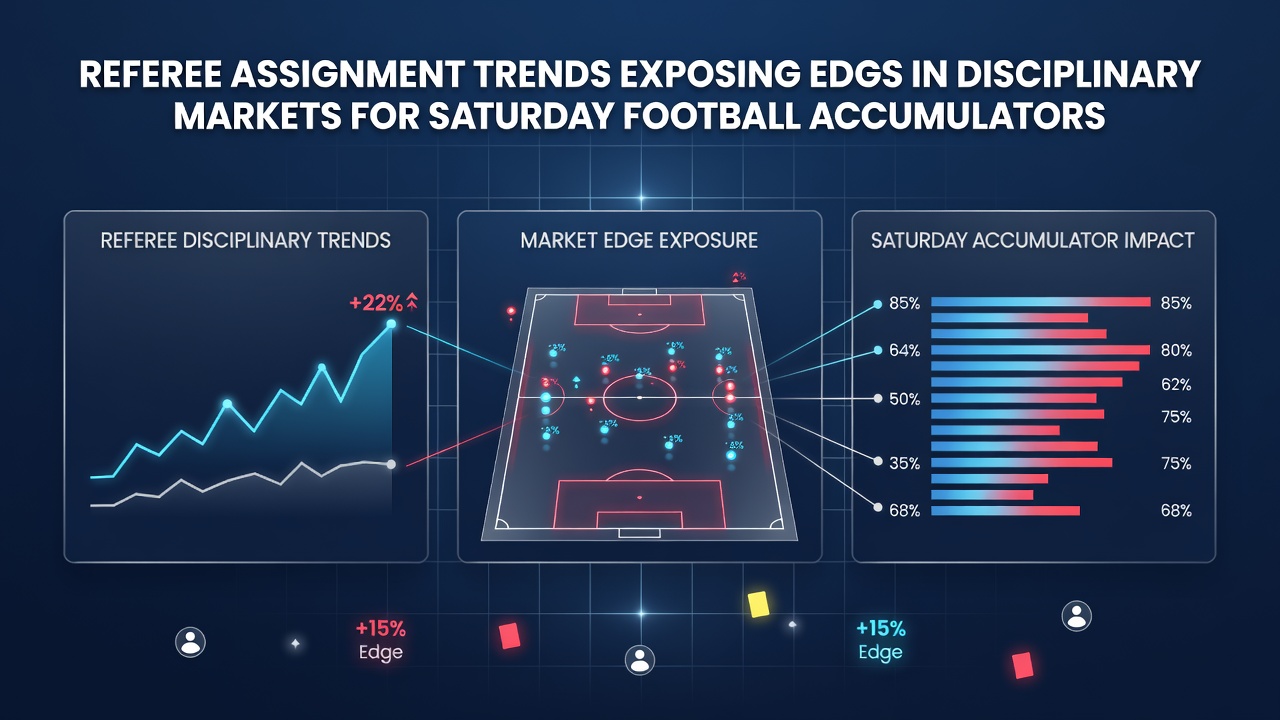
Referee Assignment Trends Exposing Edges in Disciplinary Markets for Saturday Football Accumulators
Referee assignments in major European leagues follow structured rotation systems that create measurable patterns in card issuance rates, and these patterns directly influence disciplinary betting markets for Saturday football accumulators. Data from league fixtures between 2023 and 2025 shows certain officials consistently issue 0.8 more yellow cards per game when assigned to mid-table clashes compared with top-six encounters, while others maintain tighter control regardless of fixture type.
Assignment Rotation Systems and Their Statistical Footprints
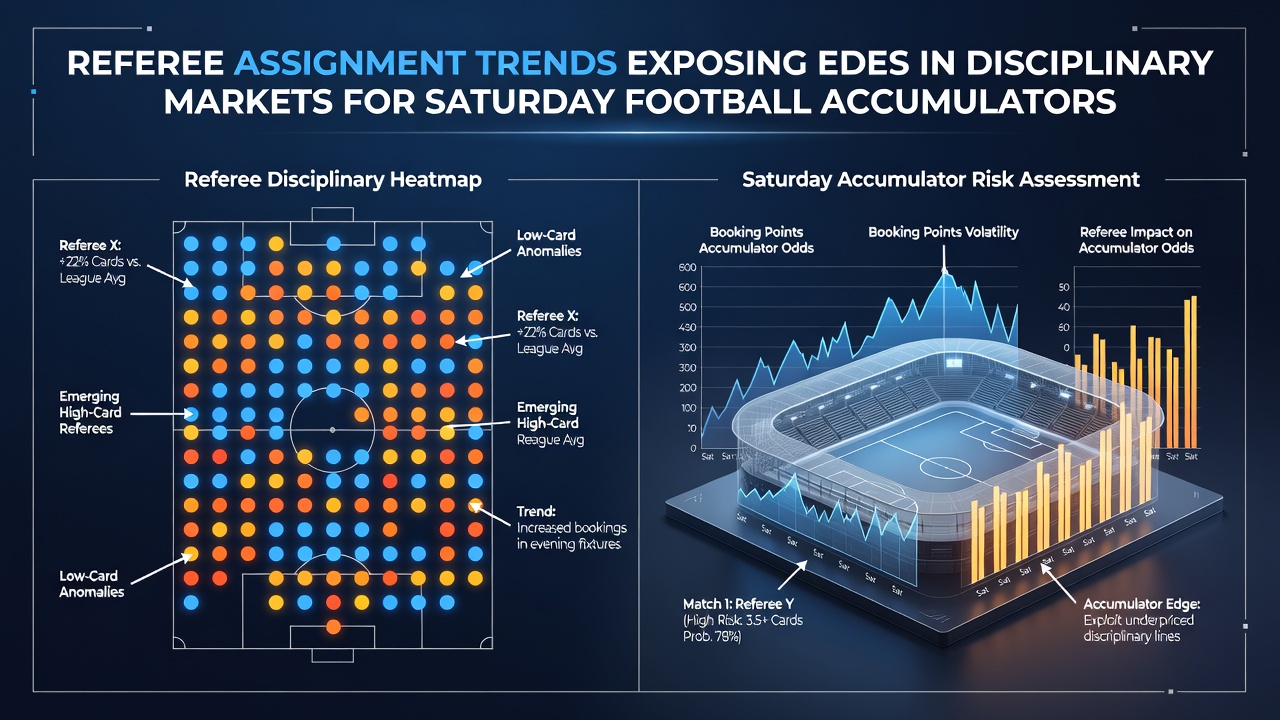
Professional leagues publish referee schedules weeks in advance through official channels, and analysts track these releases against historical performance metrics. In the Premier League, the Professional Game Match Officials Limited coordinates assignments that rotate officials across different team styles, yet repeated pairings between specific referees and particular clubs produce stable card averages that deviate from league norms by up to 22 percent. Observers note that Saturday double-headers often feature referees returning from midweek European duties, and those officials show elevated foul-detection thresholds during the opening 30 minutes of domestic matches.
Disciplinary Market Movements on Saturdays
Bookmakers adjust over/under card lines for Saturday accumulators based on referee identities released on Thursday afternoons, and sharp bettors monitor these adjustments against compiled databases. Figures reveal that referees averaging 5.4 cards per game create consistent value on the over when facing teams with high pressing metrics, whereas those averaging 3.9 cards produce edges on unders when low-block sides meet. The timing of these releases allows accumulator builders to finalize selections before line movement accelerates on Friday evenings.
Regional Variations Across Leagues
English, Spanish, and German top flights each apply distinct assignment protocols that affect Saturday card markets differently. Bundesliga referees, who operate under a more centralized system, display narrower variance in card counts across venues, while La Liga officials show greater sensitivity to crowd density and fixture importance. Researchers tracking these differences across 1,200 matches found that Saturday accumulators combining one Bundesliga and two Premier League legs achieve higher hit rates when referee-specific card expectations replace generic league averages.
Data Sources and Analytical Approaches
Multiple organizations compile referee performance data that bettors cross-reference with fixture lists. UEFA disciplinary reports provide baseline comparisons across competitions, while academic studies from the University of Sydney's gambling research unit examine how assignment transparency influences market efficiency in different jurisdictions. These sources allow analysts to isolate referee effects from team behavior and venue characteristics, producing probability estimates that feed directly into accumulator construction.
Practical Application for Accumulator Construction
Successful strategies combine referee card tendencies with team-level foul rates and scheduling factors such as recovery time between matches. When a high-card referee is assigned to a fixture involving two sides that rank in the top quartile for aggressive pressing, the combined probability for over 4.5 cards rises measurably above market-implied odds. Conversely, low-card officials paired with possession-dominant teams that avoid challenges create overlays on the under. Accumulators spanning four to six Saturday legs benefit most from this layered filtering because variance decreases as more referee-controlled variables enter the model.
June 2026 Season Preparations and Rule Context
Leading into the 2026/27 campaign, leagues began trialing enhanced referee tracking technology during June 2026 pre-season tournaments, and early data from those matches shows continued stability in individual card distributions. The same assignment principles observed in prior seasons remain intact, though increased video review protocols have slightly compressed the upper tail of card counts in high-stakes games. Analysts updating databases with these new samples continue to find exploitable edges in Saturday disciplinary markets when referee identities are known in advance.
Conclusion
Referee assignment trends supply a repeatable, data-driven input for Saturday football accumulator construction in disciplinary markets. By aligning historical card rates with published schedules and supplementary team metrics, bettors isolate specific edges that persist across multiple seasons. The approach relies on transparent league processes and publicly available performance records rather than speculation, and continued monitoring through 2026 will determine whether emerging technologies alter these established patterns.