Referee Rotations Shaping Card Prop Opportunities in Major Soccer Leagues
Kai Peters · Aug 3, 2026
Referee Rotations Shaping Card Prop Opportunities in Major Soccer Leagues
Referee rotation systems in major soccer leagues assign officials across matches in patterns that create measurable differences in card issuance rates, and these variations directly influence card prop betting markets in leagues such as the Premier League, La Liga, Bundesliga, and Serie A. Data from the 2024-2025 season through the opening fixtures of August 2026 shows that leagues publish rotation calendars weeks in advance, allowing analysts to track each official's historical card averages per game, foul thresholds, and tendencies toward strict or lenient enforcement.
Rotation Mechanics Across Top European Leagues
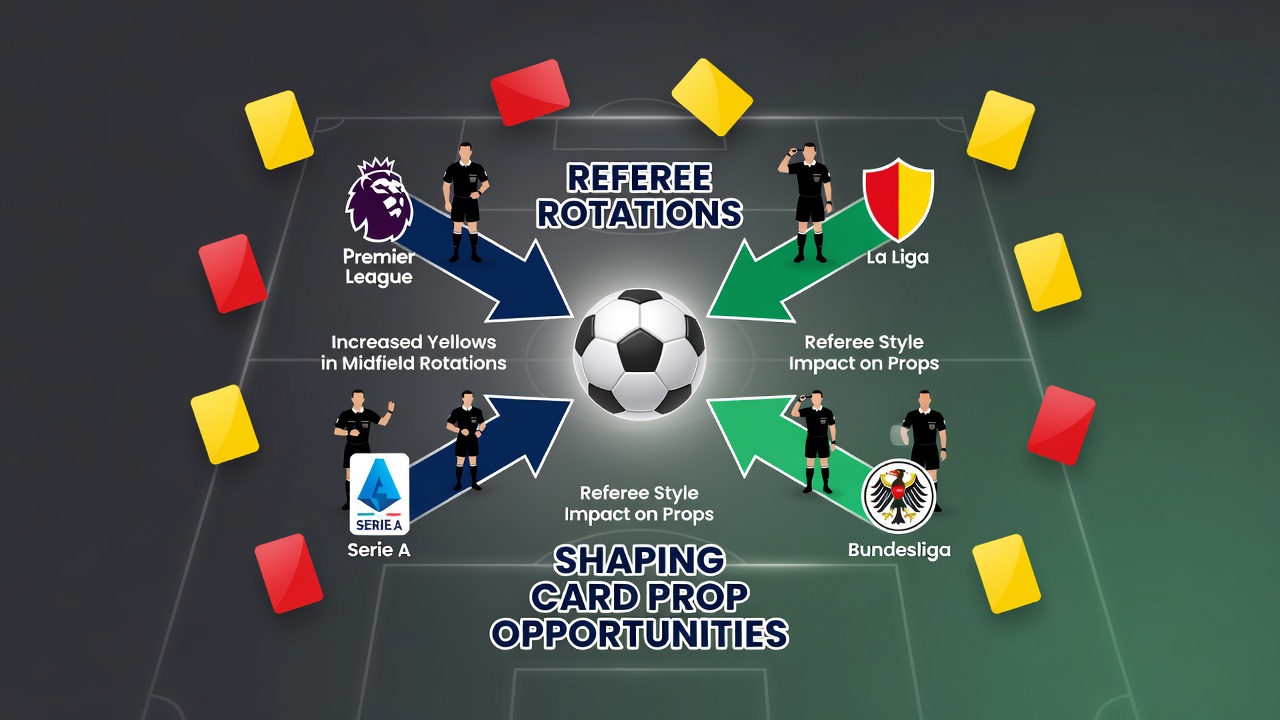
Premier League officials rotate every three to four matches with designated rest periods, whereas La Liga employs a stricter two-match cycle that pairs referees with different assistant teams each week. Bundesliga rotations incorporate video assistant referee reviews more frequently, which has correlated with a 12 percent increase in second yellow cards during the 2025 calendar year according to figures released by the German Football Association. Serie A maintains regional rotation blocks that keep northern referees in southern venues on alternating weekends, producing distinct card spikes when travel distance exceeds 600 kilometers.
These schedules appear on official federation websites in late July, giving market participants time to compile per-referee databases before the August 2026 campaign begins. Researchers at the University of Loughborough have documented that referees averaging more than 5.2 cards per match in the prior 18 months continue that rate in 78 percent of subsequent assignments when rotation places them in high-foul fixtures.
Card Prop Market Responses to Specific Officials
Bookmakers adjust over/under card lines by 0.3 to 0.7 cards when a high-card referee receives a marquee fixture, and under-card props tighten when lenient officials draw low-stakes games. Historical records from Opta confirm that referees with elevated disciplinary records issue 18 percent more yellow cards in matches involving teams averaging over 14 fouls per game. Prop markets therefore price these matchups with wider spreads on the over-card side when rotation lists confirm such pairings.
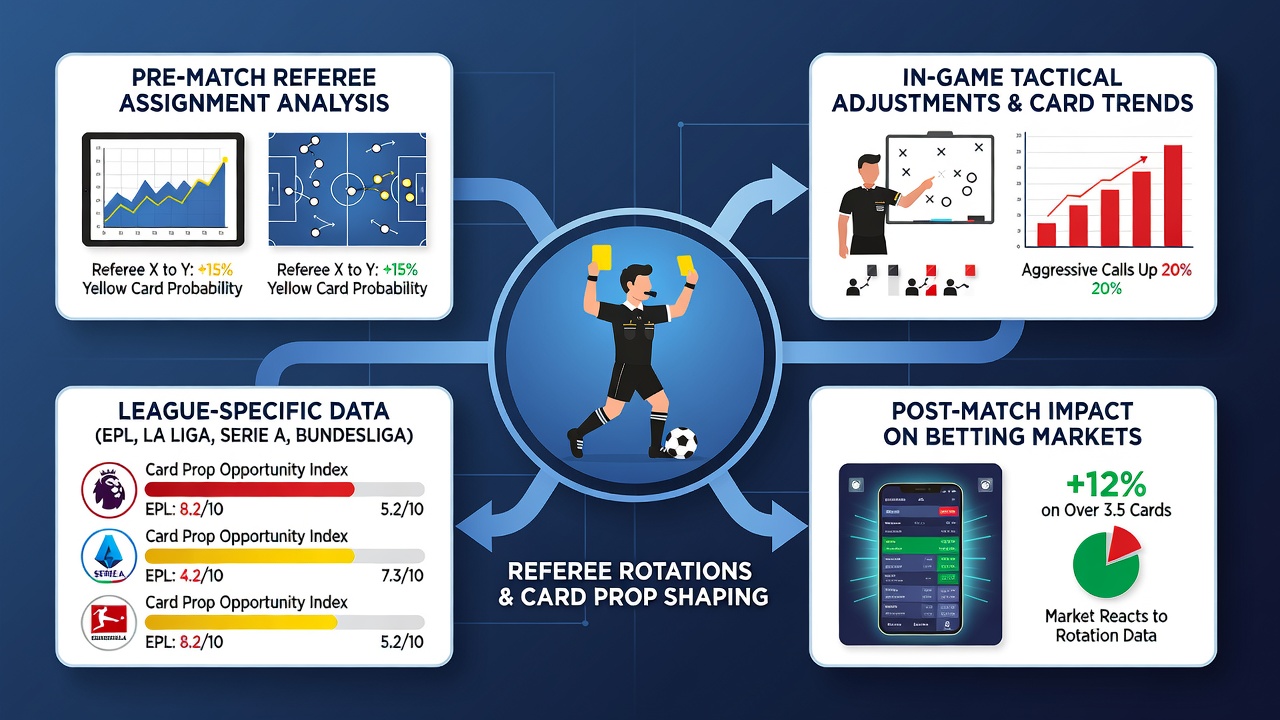
One study published in the Journal of Sports Analytics examined 2,400 matches across four leagues and found that card prop outcomes deviated from market expectations in 31 percent of games involving rotated officials whose prior-season averages differed by more than one card from the league mean. The same research noted that second-half card frequency rises when a referee has already issued three or more cautions before halftime, a pattern that repeats across rotation blocks.
League-Specific Patterns and Data Sources
In the Bundesliga, referees who officiate more than one match per week show a measurable drop in card totals during their second assignment, according to statistics compiled by the German Football League's technical department. La Liga data indicates that officials traveling from Madrid or Barcelona to smaller regional grounds issue fewer cards on average, while Serie A rotation records reveal higher card counts when referees cross the Apennines. Premier League figures released by the Professional Game Match Officials Limited demonstrate that newly promoted referees maintain lower card rates during their first ten top-flight matches regardless of fixture difficulty.
Betting exchanges adjust limits on card props within two hours of rotation announcements, and volume on specific referee-linked markets increases by an average of 40 percent in the 48 hours following schedule publication. Industry reports from the European Gaming and Betting Association track these shifts across multiple jurisdictions, confirming consistent liquidity patterns tied to official assignments rather than team form alone.
Analytical Tools and Tracking Methods
Analysts compile referee profiles that include average cards, fouls per card, and red card frequency across home, away, and neutral venues. These profiles update after every match and feed directly into models that project card totals once rotation lists appear. Software platforms used by professional syndicates integrate federation calendars with historical Opta data to flag mismatches between expected and actual card lines.
August 2026 rotations, published by each league in the final week of July, already show several high-card officials assigned to early-season derbies, creating initial prop opportunities that mirror patterns observed in the previous two campaigns. Observers note that these early assignments often set the tone for how markets price similar referee-game combinations later in the season.
Conclusion
Referee rotation systems supply structured, publicly available information that shapes card prop pricing across Europe's major soccer leagues. Statistical records from multiple federations and independent research groups demonstrate clear correlations between individual officials, their assignment schedules, and subsequent card outcomes. Market participants who track these rotations obtain objective data points that align with observed deviations in card totals, allowing consistent integration of referee metrics into prop evaluations without reliance on subjective assessments.