Seasonal Progression Patterns in Basketball League Tables Guiding Accumulator Construction Strategies
Iris Wolf · Aug 1, 2026
Seasonal Progression Patterns in Basketball League Tables Guiding Accumulator Construction Strategies
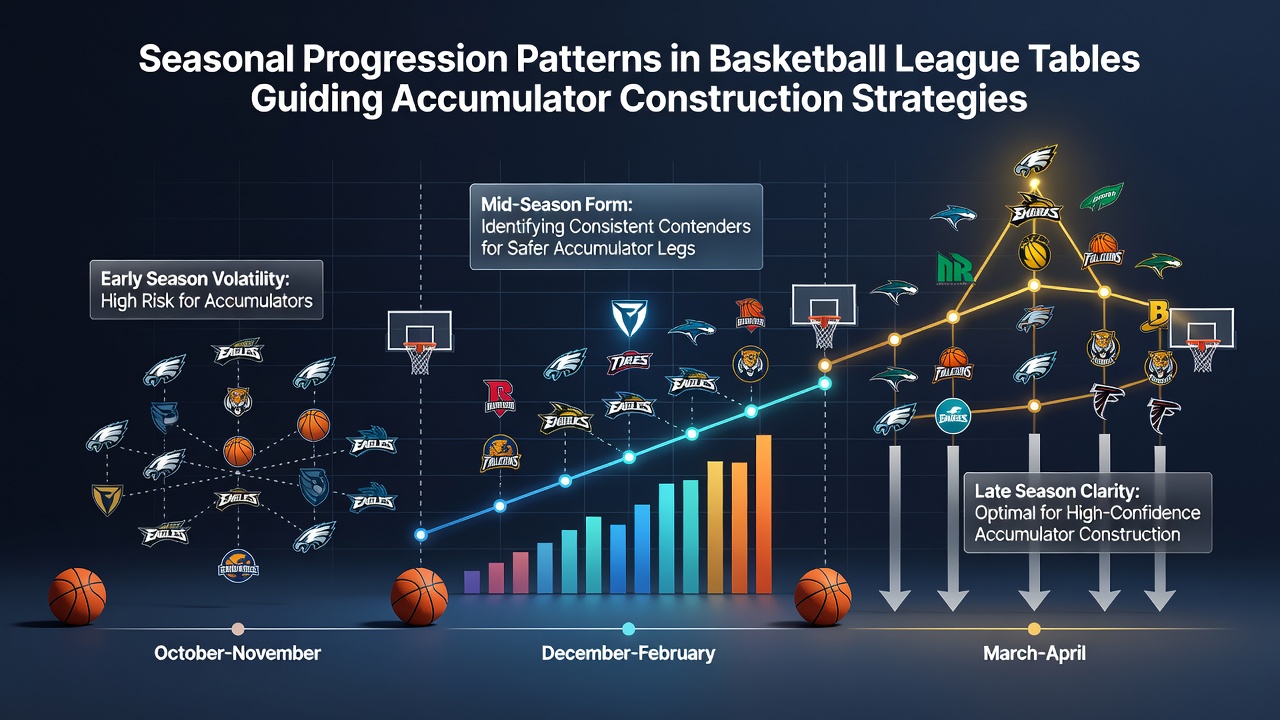
Analysts tracking basketball league tables have identified recurring progression patterns that unfold across regular seasons in major competitions such as the NBA and EuroLeague, where team records shift in measurable ways from opening weeks through playoff qualification races. These shifts arise because squads adapt to injuries, roster changes, and schedule density, creating windows where certain outcomes cluster more predictably than random models suggest. Data compiled over multiple campaigns shows that early-season volatility gives way to stabilization periods, after which late-season motivation effects alter win probabilities for teams positioned near playoff cutoffs or relegation lines in European domestic leagues.
Early Season Volatility and Table Reshuffling
League tables in October and November often feature compressed point spreads among mid-table clubs because preseason preparations produce uneven results against varying opposition strengths, according to aggregated box-score metrics from the past decade. Teams returning multiple core players tend to post stronger records in the first 20 games than those undergoing roster overhauls, yet exceptions occur when new coaching systems require longer adjustment intervals. Observers note that November data frequently reveals overperformance by squads with favorable home schedules, while road-heavy itineraries correlate with slower starts that later correct once chemistry develops. Such patterns provide baseline references for constructing accumulators that combine selections from different conferences or time zones where fixture congestion levels differ markedly.
Mid-Season Stabilization and Momentum Clusters
By January, tables begin reflecting sustained performance trends as travel fatigue and back-to-back game loads accumulate, leading researchers to document clusters of consecutive wins or losses among teams occupying similar standings positions. Mid-season tournaments or All-Star breaks interrupt these sequences, after which teams returning from rest periods show elevated win rates in the following fortnight when facing opponents still adjusting to resumed play. Figures from league-wide tracking systems indicate that defensive efficiency metrics tighten during this phase because scouting adjustments reduce high-variance offensive outputs. Accumulator builders therefore examine cumulative point differentials rather than isolated results to identify sides whose underlying numbers diverge from current table positions, particularly in conferences where tiebreakers hinge on head-to-head results accumulated across the middle third of the schedule.
Late Season Motivation Effects and Playoff Positioning
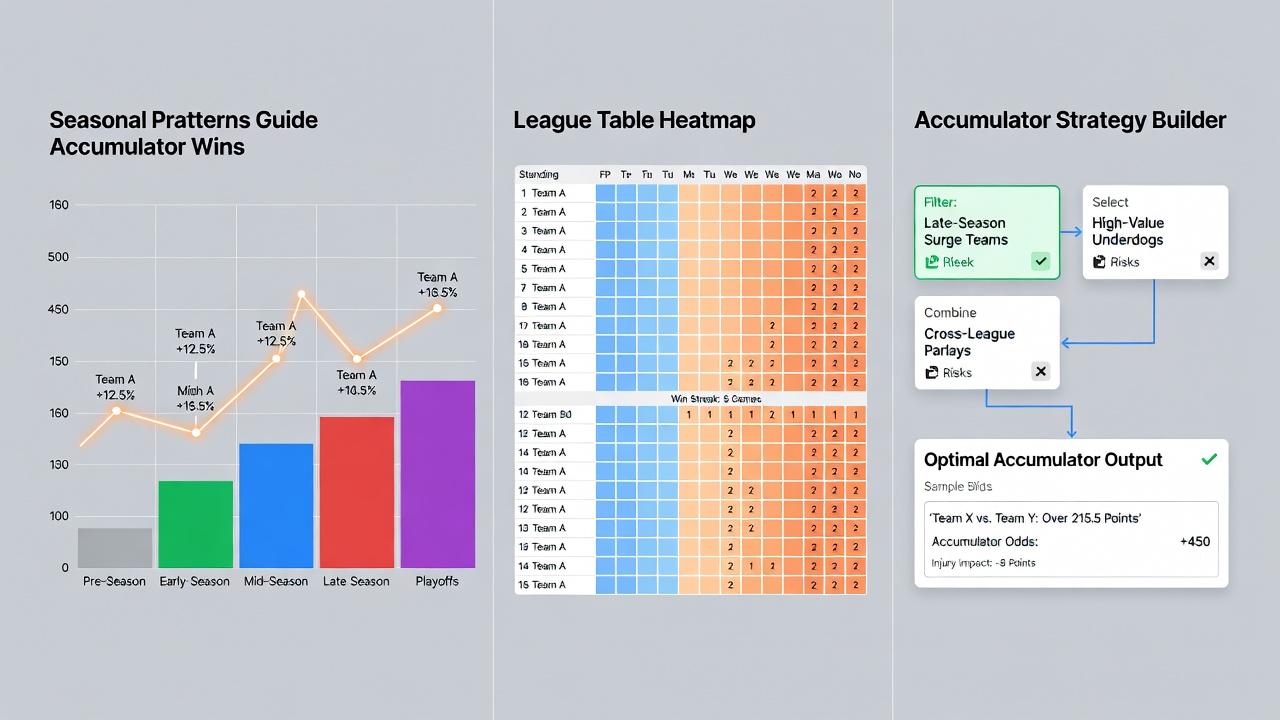
As March arrives, motivation differentials sharpen table trajectories because teams near qualification thresholds prioritize specific matchups while others experiment with lineups ahead of draft considerations or contract decisions. Historical records demonstrate that squads eliminated from contention post higher offensive outputs in remaining games, whereas contenders tighten defensive schemes to secure favorable playoff seeds. In August 2026, preparatory data releases ahead of the 2026-27 campaign are expected to incorporate refined tracking of load management practices that previously influenced late-season variance. These patterns allow accumulator strategies to layer selections around remaining fixture difficulty, with emphasis on games between mid-table sides whose motivation levels align or diverge based on concurrent results elsewhere in the standings.
Constructing Accumulators Around Documented Progression Windows
Accumulator construction benefits from segmenting seasons into discrete phases because each interval carries distinct statistical signatures that influence multi-leg outcomes. Early-phase selections often pair teams with strong home records against opponents still traveling heavily, while mid-phase legs incorporate rest-advantage indicators derived from schedule density reports. Late-phase legs focus on motivation-weighted probabilities drawn from remaining games and concurrent table scenarios. Data from multiple European and North American leagues shows that combining legs across these windows reduces variance compared with selections concentrated in any single month, provided each leg draws on verified historical distributions rather than single-season anomalies. Analysts cross-reference injury reports and travel metrics to refine these combinations before each round of fixtures.
Regional Variations Across Competitions
Domestic leagues outside the NBA exhibit parallel yet distinct progression rhythms because shorter seasons compress the same dynamics into fewer games, whereas longer North American schedules allow more pronounced mid-season corrections. In leagues with promotion and relegation, late-season desperation effects appear earlier than in closed franchises, altering the timing of momentum shifts that accumulator models must account for. Comparative studies across these structures highlight that travel distance and game density remain the primary drivers regardless of geography, with secondary influences from weather-related postponements or international break interruptions. Those constructing accumulators therefore calibrate phase boundaries to match each league's calendar length rather than applying uniform monthly cutoffs.
Conclusion
Seasonal progression patterns in basketball league tables emerge from measurable interactions among schedule, roster continuity, and competitive incentives that repeat across campaigns. By segmenting data into early, middle, and late intervals, analysts identify recurring statistical signatures that inform the sequencing and selection of accumulator legs. Ongoing collection of tracking metrics continues to refine these observations, particularly as load-management protocols evolve ahead of future seasons.