Squad Depth Metrics Guiding Midweek European Football Accumulator Selections
Mia Berger · Jul 8, 2026
Squad Depth Metrics Guiding Midweek European Football Accumulator Selections
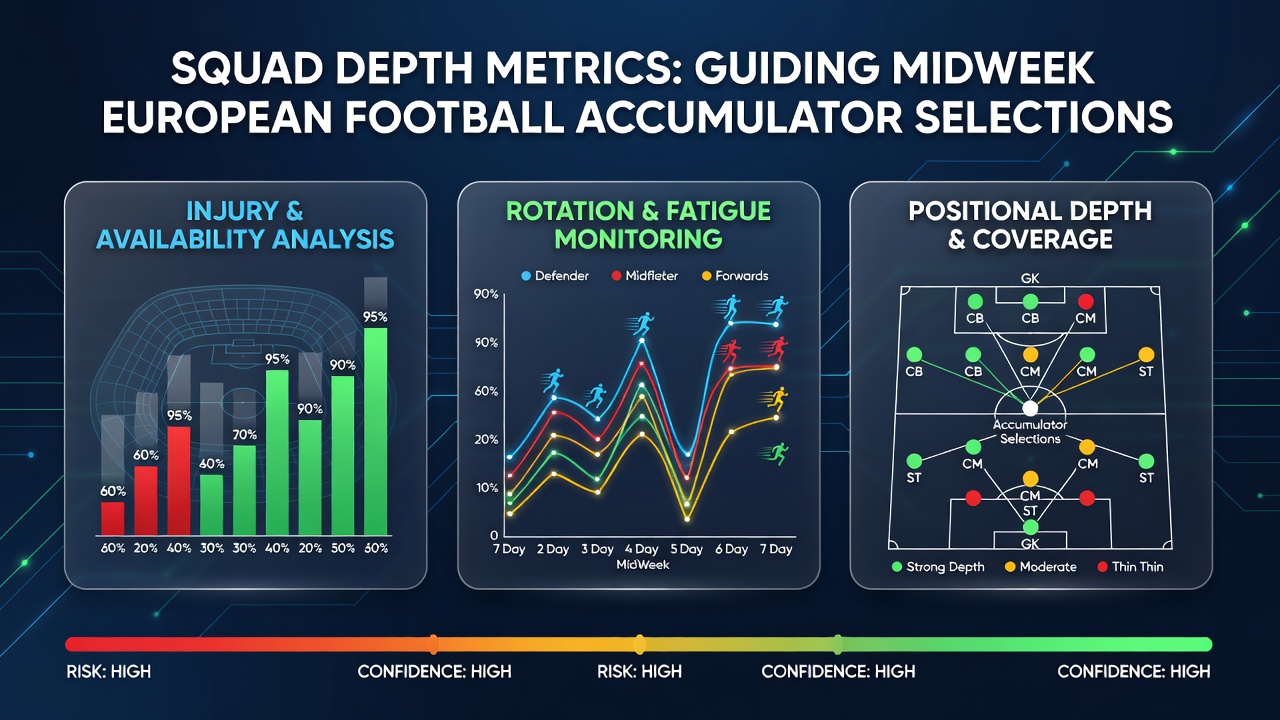
European football calendars pack midweek fixtures into tight windows, and squad depth metrics have emerged as reliable indicators for accumulator selections across Champions League, Europa League, and Conference League ties. Data from recent seasons shows that teams maintaining broader player pools sustain performance levels when matches cluster, whereas shallower squads experience measurable dips in key metrics such as pass completion and expected goals created.
Core Metrics Used in Depth Analysis
Analysts track several quantifiable indicators to assess squad resilience before midweek rounds. Minutes distribution among the top 18-20 players reveals rotation patterns, while substitute contribution rates measure how effectively bench options integrate during congested periods. Injury incidence logs from the previous six weeks provide additional context, since cumulative fatigue often correlates with elevated soft-tissue issues. Teams that rotate at least four starting positions between domestic and European games post higher win percentages in away fixtures, according to aggregated match data compiled through the 2025-26 campaign.
Performance variance between full-strength and rotated lineups offers another layer of insight. Clubs averaging above 65 percent squad utilization across all competitions tend to maintain stable defensive records, whereas those dipping below 55 percent show increased concessions after the 70-minute mark. These figures become especially relevant during July 2026 when pre-season schedules overlap with early qualifying rounds, forcing coaches to balance fitness building against competitive demands.
Midweek Fixture Congestion Patterns
July and August schedules intensify rotation needs because qualifying ties often follow immediately after domestic league openers. Historical records indicate that sides traveling more than 1,000 kilometers for midweek European matches record lower clean-sheet rates when their available squad depth falls under 16 fully fit players. Accumulator builders therefore cross-reference travel distance with squad-size thresholds to identify matches where under-2.5 goals or draw outcomes carry elevated probability.
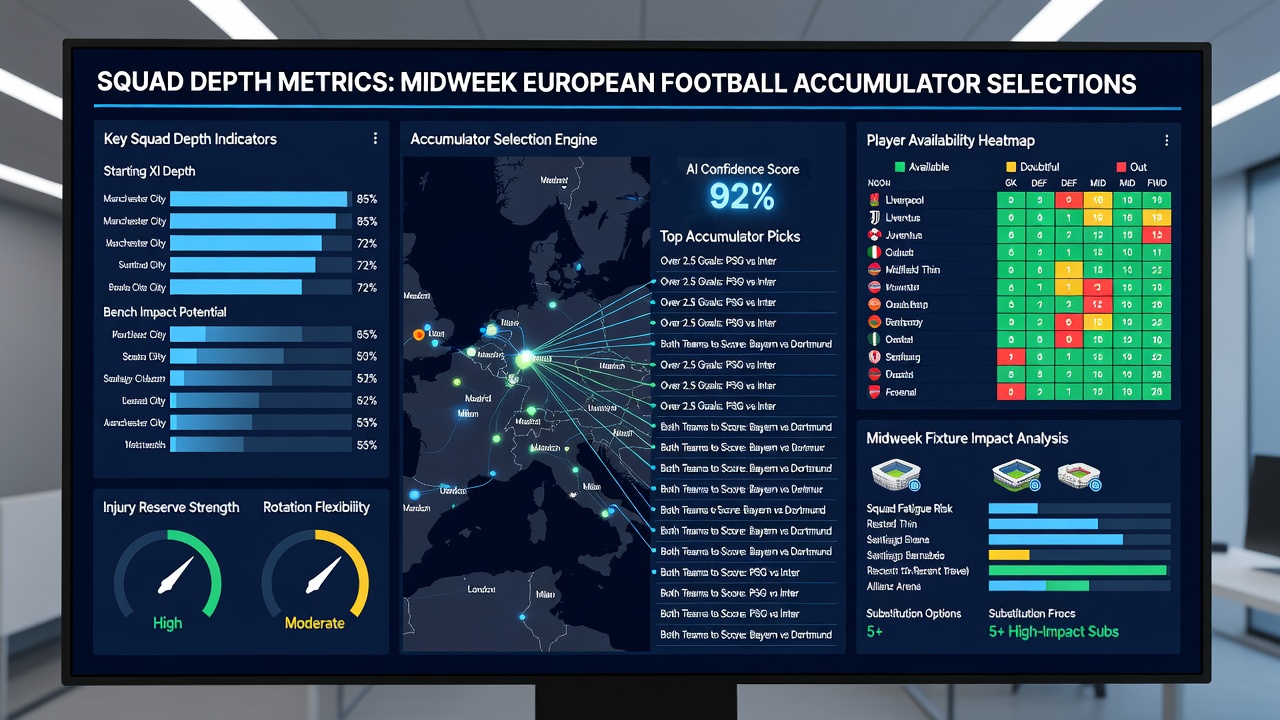
What's interesting here is how bench scoring output influences both over and under selections. Teams whose substitutes contribute more than 0.8 goals per 90 minutes across the prior month frequently deliver elevated total goals in midweek encounters, because opponents must account for fresh attacking options late in games. Conversely, squads relying on fewer than three regular contributors from the bench exhibit sharper declines in shot creation after the hour mark.
Accumulator Construction Using Depth Indicators
Successful accumulators combine multiple legs where depth metrics align with specific betting angles. One common approach pairs a home win for a deep squad facing a shallow opponent with an under-2.5 goals selection involving two fatigued sides. Data shows these combinations produce higher hit rates when both teams have played within 72 hours of the midweek fixture and possess fewer than 17 available players at full training intensity.
Another layer involves monitoring expected minutes for key individuals. When primary midfielders are slated for reduced roles due to recent workload, teams often shift toward more conservative structures, which correlates with fewer corners and lower card counts. Accumulators targeting these secondary markets benefit from pre-match confirmation of squad lists released 24 hours before kickoff.
Regional Variations Across Competitions
Northern and Eastern European clubs frequently demonstrate greater depth advantages during summer qualifiers because domestic leagues conclude earlier, allowing fuller recovery periods. In contrast, Southern clubs entering from ongoing domestic campaigns post higher variance in second-half performance when squad utilization exceeds 70 percent across the prior fortnight. These geographic patterns allow accumulators to diversify across multiple time zones while maintaining consistent metric filters.
Research from the University of Loughborough's sports performance unit highlights how elite academies contribute measurable depth through promoted youth players who log at least 200 minutes in pre-season friendlies. Sides integrating three or more academy graduates into European matchday squads record improved pressing efficiency metrics, which translates to better results in matches requiring high-intensity pressing after short recovery windows.
Practical Data Integration Steps
Those constructing accumulators begin by compiling squad availability reports from official club channels and cross-checking against historical rotation logs. They then apply filters for travel distance, recent fixture density, and substitute goal contributions before finalizing selections. External validation comes from reports issued by the European Club Association, which publishes annual squad management surveys detailing average player utilization rates across member clubs.
Turnouts from the 2025-26 qualifying rounds already demonstrate that clubs publishing transparent depth statistics attract sharper betting market responses, with line movements reflecting updated availability news more rapidly than in previous cycles. This transparency improves the reliability of accumulator models that incorporate real-time squad updates.
Conclusion
Squad depth metrics supply objective frameworks for navigating midweek European football accumulators by quantifying rotation capacity, bench output, and fatigue indicators. When applied consistently across qualifying and group-stage fixtures, these measures help isolate matches where performance stability diverges between competing sides, supporting data-driven multi-leg selections through the 2026 calendar.