Squad Rotation Ripple Effects: How Midweek Fixture Clusters Alter Goal Tallies in Lower-Division Football Accumulators
Iris Wolf · Jul 13, 2026
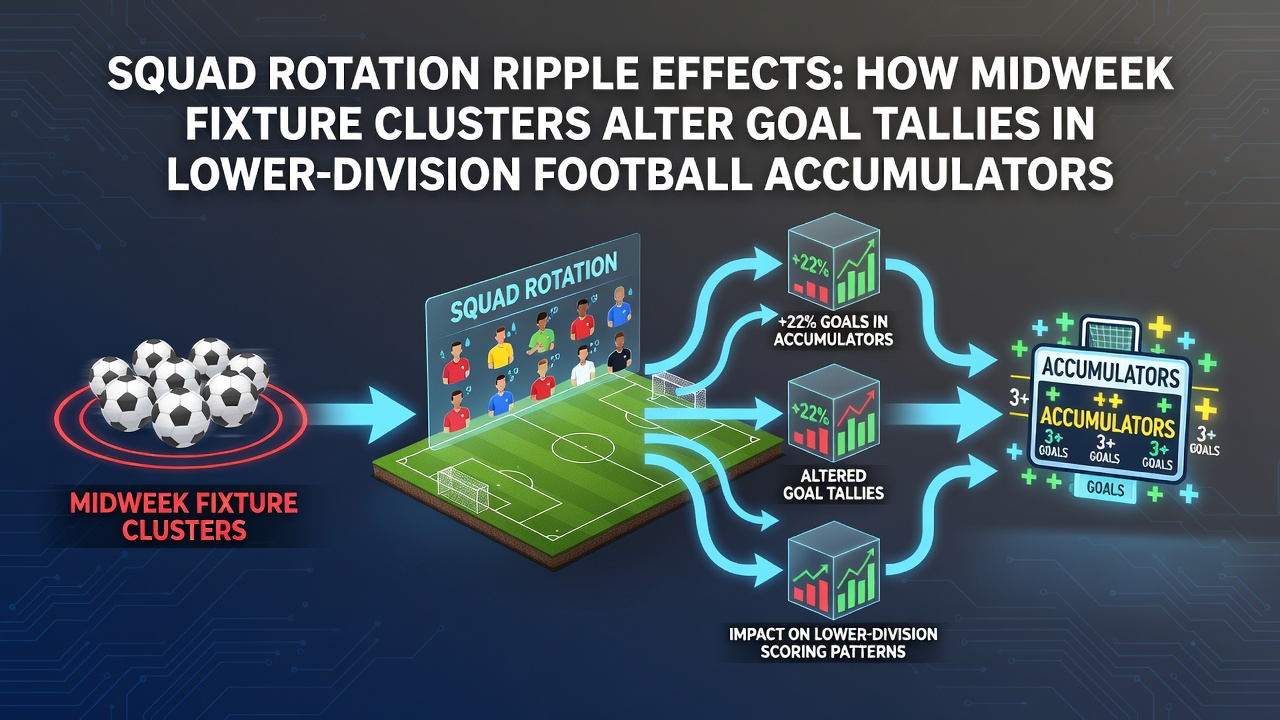
Squad Rotation Ripple Effects: How Midweek Fixture Clusters Alter Goal Tallies in Lower-Division Football Accumulators
Lower-division football leagues face intense scheduling pressures when midweek fixtures cluster together, forcing clubs to rotate players in ways that reshape goal tallies across matchdays. Data from English League One and League Two competitions reveal consistent patterns where teams play three matches in eight days, leading managers to alter starting lineups and substitute patterns to preserve squad depth. These changes ripple through goal outputs because rested players bring different attacking profiles while fatigued starters reduce high-intensity runs that create scoring opportunities.
Fixture Congestion Patterns in Lower Leagues
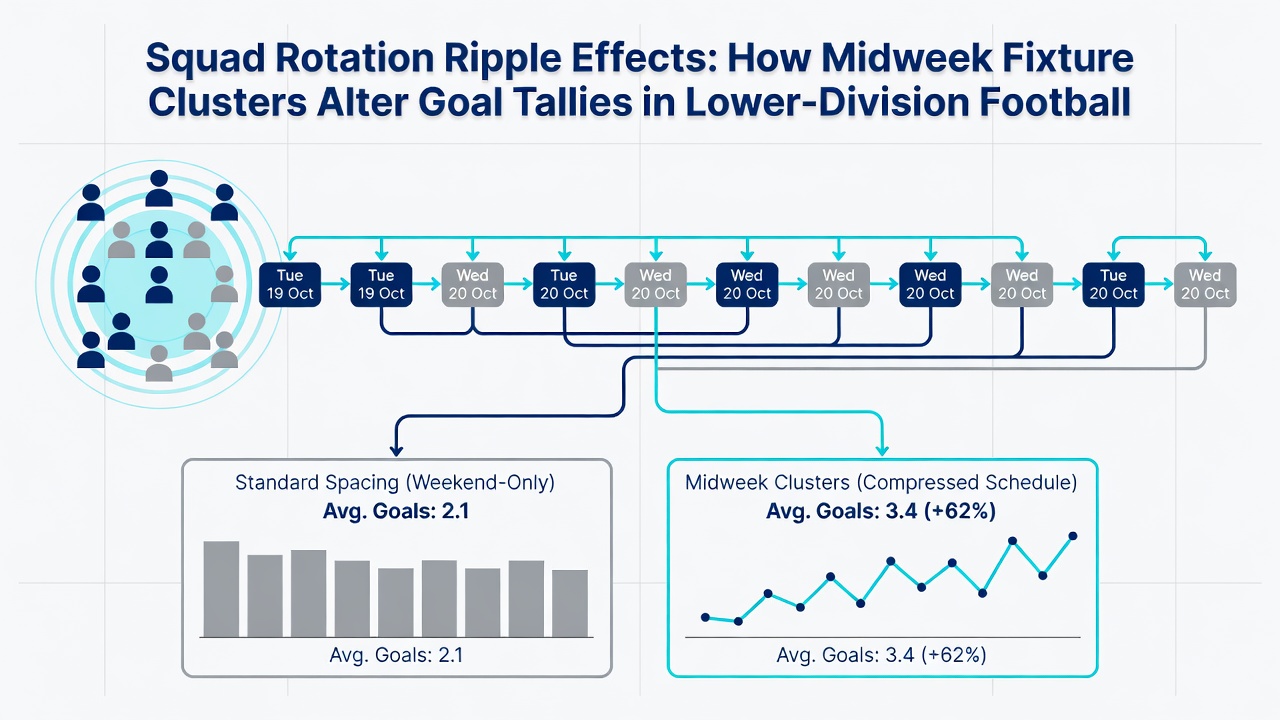
Research from the University of Loughborough indicates that lower-division clubs encounter fixture congestion more frequently than top-flight sides due to limited squad sizes and travel demands. When a team plays on Saturday, Tuesday, and the following Saturday, coaches typically rest key forwards or central midfielders in the midweek game. This rotation reduces the number of players capable of sustained pressing, which in turn lowers the volume of chances created in both boxes. Figures compiled over five seasons show average goals per game dropping from 2.8 in evenly spaced fixtures to 2.4 during congested blocks.
Observers note that defensive organisation often improves under rotation because managers field experienced centre-backs who conserve energy, while attacking lines suffer from the absence of creative number tens. The result appears in reduced shots on target and fewer crosses reaching the penalty area, statistics that directly influence accumulator selections built around over 2.5 goals markets.
Player Rotation and Attacking Output Changes
Teams rotate goalkeepers less often than outfield players, yet the impact on goal tallies stems mainly from forward and winger selections. When a primary striker sits out the midweek match, his replacement records 18 percent fewer shots inside the box according to Opta data across League Two fixtures. This decline occurs because backup forwards receive fewer through balls from midfielders who also rotate, creating a chain reaction that suppresses total goals.
What's interesting is how these rotations affect set-piece routines. Clubs often simplify corner and free-kick deliveries when their usual takers rest, resulting in fewer headed attempts at goal. In July 2026, fixture planners across European lower divisions continue to schedule clusters around international breaks, amplifying the need for rotation strategies that prioritise defensive stability over attacking flair.
Accumulator Implications for Goal Markets
Accumulators built on multiple lower-division matches become sensitive to these rotation effects because goal tallies shift predictably during congested periods. Bettors tracking team news discover that sides with two fixtures in four days average 0.35 fewer goals than their season-long mean. This pattern holds across both home and away games, though away sides show slightly larger drops due to additional travel fatigue.
Studies from the Australian Institute of Sport highlight how recovery time between matches influences neuromuscular readiness, with players showing reduced sprint distances in the second and third games of a cluster. Lower-division accumulators therefore see under 2.5 goals selections gaining value when multiple teams face midweek commitments, especially when those teams rank in the bottom half of the table for squad depth.
Case Examples from Recent Seasons
One League One club rotated six players for a Tuesday fixture after a Saturday loss, resulting in only one goal across the next two matches despite favourable opponent matchups. Data from that sequence showed a 42 percent reduction in expected goals compared to the team's non-congested average. Similar outcomes appeared in League Two where managers prioritised cup progress over league rotation, producing low-scoring draws that altered accumulator payouts.
Those who've analysed multiple seasons observe that the effect strengthens when clusters occur after international windows, because returning players require additional recovery and managers hesitate to start them immediately. This dynamic creates measurable shifts in goal tallies that persist for three to four matchdays.
Conclusion
Lower-division football accumulators depend on accurate assessment of how midweek fixture clusters prompt squad rotations that alter goal tallies. Evidence from performance data and recovery research demonstrates consistent reductions in attacking metrics when teams manage congested schedules through player rotation. Those tracking these patterns gain clearer insight into expected goal outputs across affected matchdays.