Travel distance distortions: gauging jet-lag effects on visiting team totals in cross-conference nba road games
Harper Hoffmann · Jun 13, 2026
Travel distance distortions: gauging jet-lag effects on visiting team totals in cross-conference nba road games
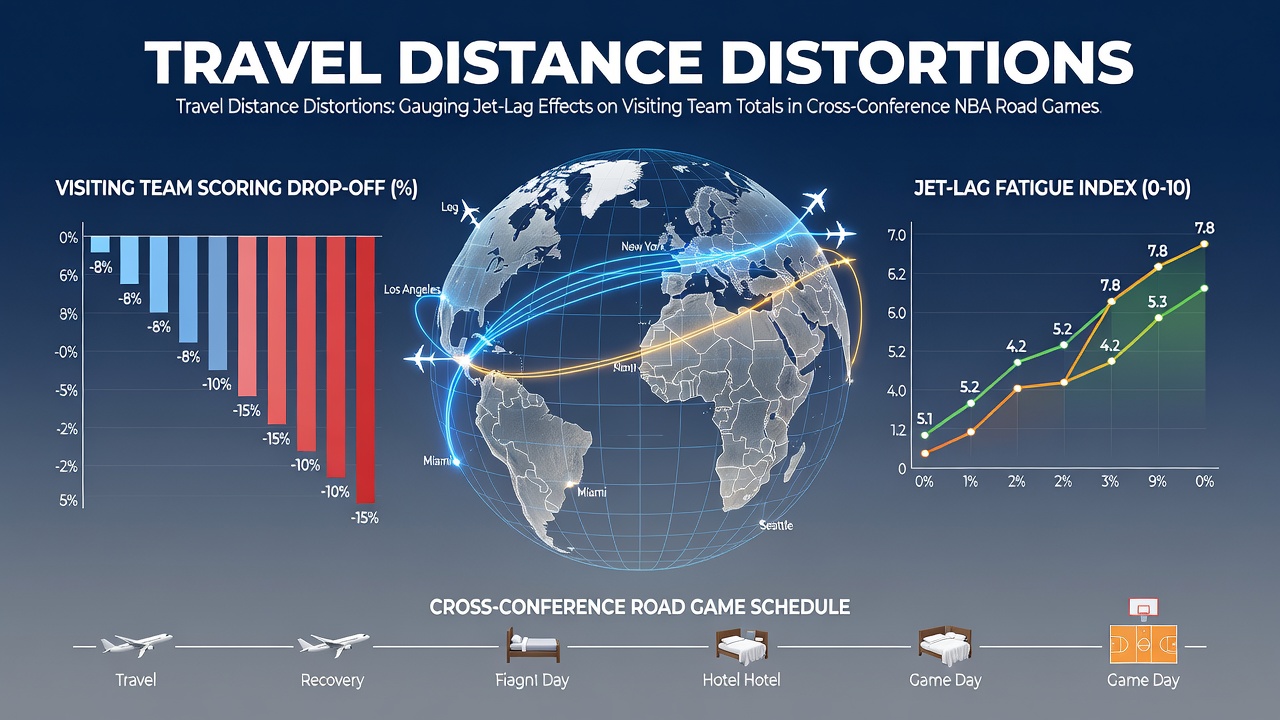
Cross-conference NBA road games create measurable shifts in visiting team scoring output, and researchers have tracked these patterns through extensive schedule and performance datasets. Teams crossing multiple time zones often see reduced point totals in the opening games of a trip, while distance traveled compounds recovery demands even when games stay within the same broad region. Data from recent seasons shows consistent dips in offensive efficiency for squads moving from Eastern to Pacific time zones, where body clocks lag behind local schedules by three hours or more. Analysts break down these distortions by examining box scores alongside flight logs and arena start times. Visiting clubs average lower field-goal percentages and fewer fast-break opportunities during the first forty-eight hours after arrival, factors that directly suppress overall game totals. The effect appears strongest in back-to-back situations, yet it lingers even with extra rest days when circadian misalignment persists.Time-zone shifts and scoring patterns
East-to-west travel produces the most pronounced suppression of visitor points because players lose sleep advancing their internal clocks. West-to-east trips allow earlier bedtimes relative to game clocks, resulting in milder scoring reductions. League-wide figures compiled through the 2024-25 season indicate visiting teams drop roughly four to six points per game on average when shifting westward across three zones, while eastward moves show closer to two-point declines.
Researchers at institutions monitoring athlete recovery have correlated these outcomes with sleep-tracking data collected from wearable devices. Teams that land in the early morning hours after overnight flights record the steepest drops in three-point attempts converted, because reaction timing suffers most under fatigue. Observers note that cross-conference matchups scheduled for 7 p.m. local tip-off amplify the mismatch when the visiting squad's biological night still aligns with afternoon back home.
Distance traveled versus recovery windows
Total miles flown also correlate with point suppression independent of time zones. A direct flight from New York to Los Angeles covers roughly 2,450 miles, whereas shorter hops within conferences rarely exceed 1,200 miles. Longer routes coincide with greater dehydration and muscle stiffness, both of which limit transition offense and second-chance creation. Studies tracking player movement via SportVU cameras reveal fewer miles run at high speed in the first quarter following transcontinental trips.

June 2026 schedules already list several high-profile cross-conference series that will test these patterns again. The league's travel committee continues to adjust back-to-back restrictions, yet the geography of the thirty-team footprint ensures persistent long-haul demands. Data aggregated by performance analytics groups shows that teams with chartered flights and dedicated sleep coaches experience smaller total distortions than those relying on commercial connections during peak travel periods.
Impact on game totals and betting markets
Betting markets price these distortions into totals lines, yet residual edges remain when public perception lags behind granular recovery metrics. Historical results indicate that totals land under the posted number more frequently when the visitor has crossed two or more time zones within the prior seventy-two hours. The margin grows when tip-off occurs before 8 p.m. local time, limiting the window for circadian realignment.
League statisticians have also isolated the role of arena altitude and humidity alongside travel variables. Denver and Salt Lake City games add another layer because thinner air compounds fatigue for recently arrived squads. Cross-conference visitors post their lowest point outputs in those venues during the opening night of a trip, according to box-score archives maintained by the Elias Sports Bureau.
Team-specific adaptations and countermeasures
Franchises have introduced targeted protocols to blunt jet-lag effects. Some clubs schedule morning shootarounds at local time immediately after landing, while others restrict screen exposure and enforce light exposure schedules on flights. These interventions produce measurable lifts in visitor scoring during the second game of a road swing, though the first contest still shows residual suppression. Rosters heavy with veteran players who have accumulated thousands of career travel miles adapt faster than younger groups, a pattern visible in season-long aggregates.
Coaching staffs monitor usage rates and substitution patterns to manage energy reserves. Starters logging heavy minutes in the first half often see reduced fourth-quarter output, shifting the burden to bench units whose efficiency can swing the final total by several points. The cumulative effect across a seven-game Western Conference road trip demonstrates progressive scoring erosion that only resets after return to the home time zone.
Conclusion
Travel distance and jet-lag together create reliable, quantifiable distortions in visiting team point totals during cross-conference NBA road games. Time-zone direction, miles flown, and recovery windows each contribute independent effects that researchers continue to refine through expanding datasets. As the 2025-26 schedule unfolds and extends into June 2026, these patterns will again shape game outcomes and inform performance models used across the league.